Tuff Shed Site Prep & Utilities: The Houston Owner’s Guide
Site prep and utility work for a Tuff Shed in Houston typically runs $2,800 – $7,500 installed, depending on whether you need a gravel pad, a concrete slab, or trenching for electrical and water lines. We keep Tuff Shed-compatible site materials and utility hardware on our trucks, and most foundation-only jobs can be scheduled within a week, not a month. The usual discovery moment is blunt: you call the county about a permit, or an electrician quotes you a number that makes you blink, and suddenly the “simple shed” has a site work bill attached to it that nobody mentioned when you bought the building.
Here’s what we’ve learned doing Tuff Shed site prep across Houston, including a few things the brochure won’t tell you about clay soil, flood-plain setbacks, and why your electrical panel might already be at capacity.
Which Tuff Shed Models This Applies To
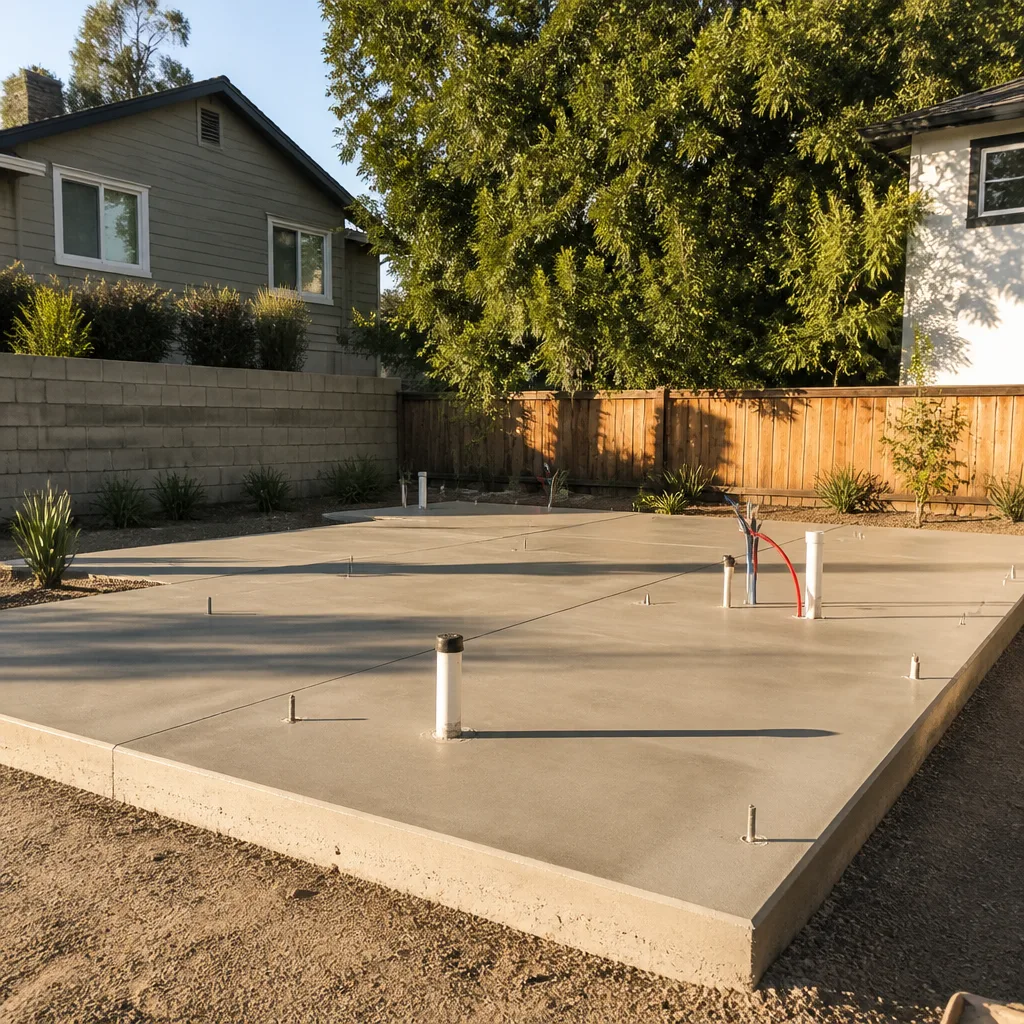
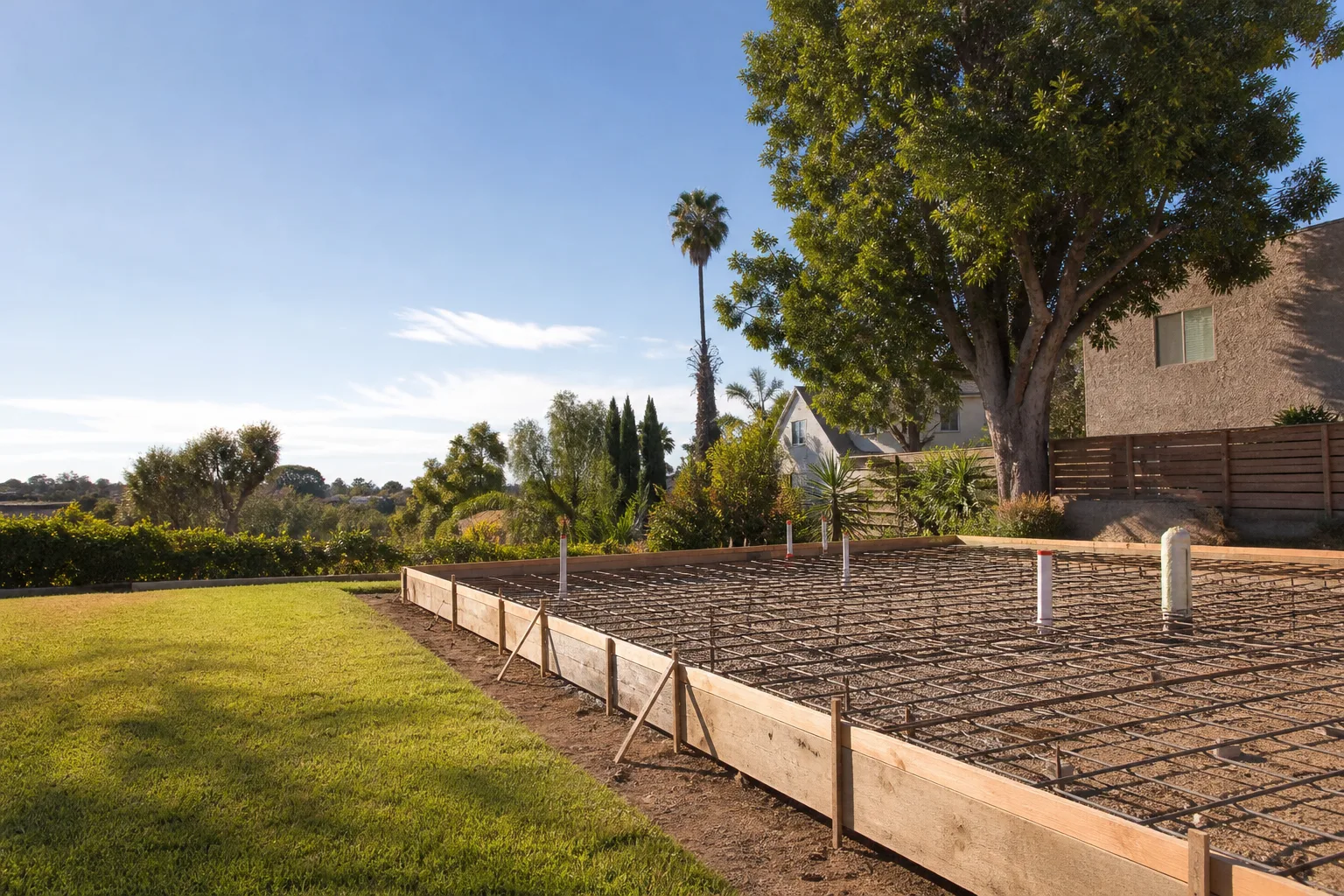
Every Tuff Shed line needs site work, but the specifics shift by model. The Premier Pro and Premier Ranch series sit on treated wood floor systems, so they can technically go on a leveled gravel pad or pier-and-beam foundation. The Tall Barn and Two-Story models are a different animal: the added height and sidewall wind load mean Houston’s building code effectively requires a reinforced concrete slab with anchor bolts, not just for stability but to satisfy the wind-resistance requirements we deal with in Harris County. The Sundance and Garden series fall somewhere in between, and we’ve seen homeowners argue with inspectors about whether a gravel pad counts as “permanent foundation” for a structure over 120 square feet in Houston city limits. It doesn’t.
For utilities, the compatibility gotcha is entrance panel location. Tuff Sheds come with a designated electrical knockout on one specific wall, and moving that entry point after the building is assembled is a miserable job. We ask homeowners to confirm which wall they want service on before the shed goes up, because trenching conduit to the wrong side and circling back costs real money. We install OEM-compatible panels and conduit, but we’re equally comfortable spec’ing Eaton or Square D subpanels when the homeowner’s main panel is already one of those brands. Cheap no-name hardware in a Houston shed that’ll see 95-degree days and 90% humidity is false economy.
Signs Your Tuff Shed Site Prep & Utilities Is Failing
- The shed has started leaning or doors won’t close square. This is almost always a base failure: either the gravel pad has settled unevenly, or a pier-and-beam support has sunk into soft ground. Houston’s gumbo clay expands and contracts with rainfall, and it’s relentless. A half-inch of differential settlement is enough to bind a Tuff Shed door.
- You see standing water under or around the shed after ordinary rain. That means the pad wasn’t graded with enough slope, or the gravel base wasn’t compacted properly, or both. Water pooling against a wood floor system will rot it from the bottom up within a few seasons.
- Your breaker trips when you run a saw or space heater in the shed. Common cause: the shed’s subpanel was fed with undersized wire for the run distance from the house, or someone tapped an existing outdoor circuit that was never meant to carry that load. Houston’s heat means people run fans and portable AC units out there, and the wiring says no.
- Anchor bolts or straps have pulled loose from the concrete. This shows up after our windstorms. If the slab was poured too thin, or anchors were set in the wrong places to line up with the shed’s bottom plates, you’ll see daylight under a corner after a good blow.
- Conduit or water lines are cracked or exposed above grade. We see this on homes where a previous owner or a handyman ran utilities along the surface instead of trenching to code depth. UV and lawn mowers destroy exposed PVC faster than people expect, and a cracked water line in Houston means a muddy mess under the shed.
Replacement Cost & What’s Included
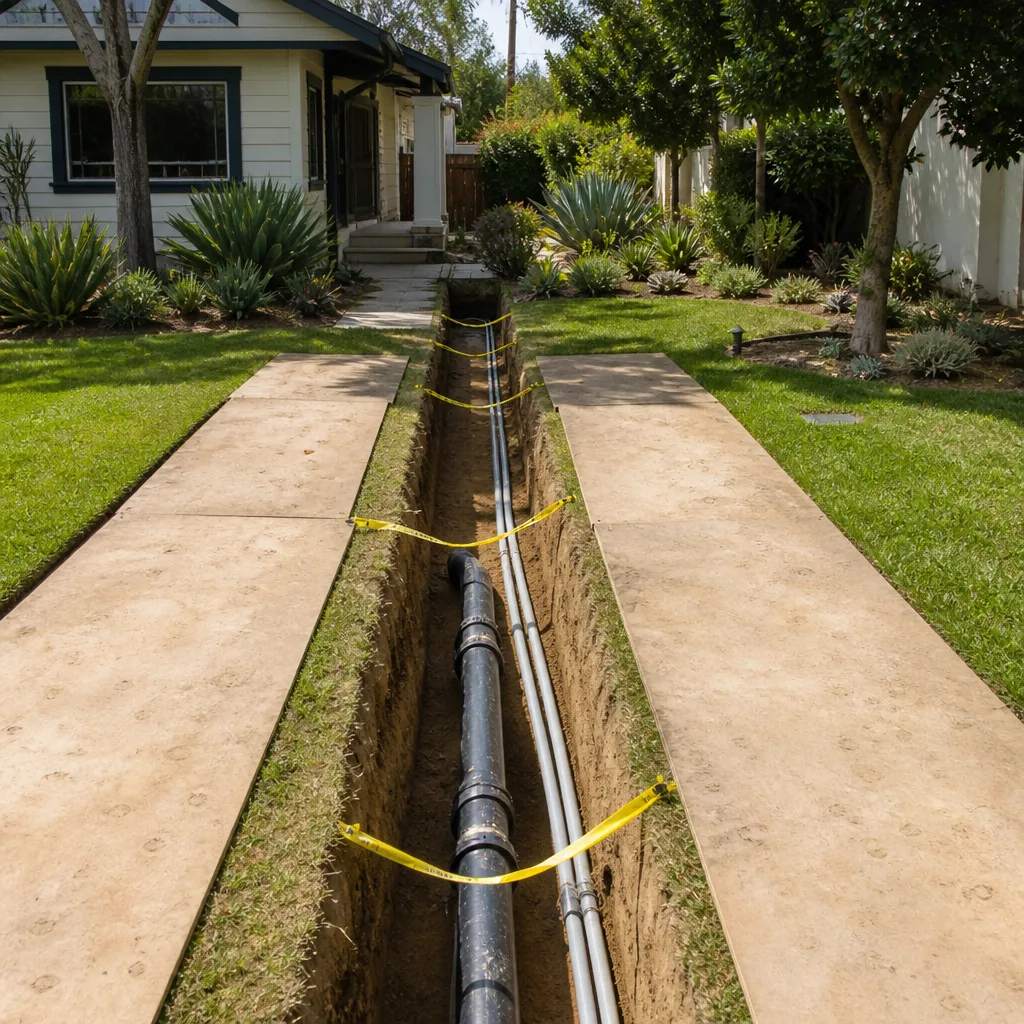
Here’s what we quote on Tuff Shed site prep and utility jobs in Houston, with honest ranges. A leveled, compacted gravel pad for a smaller shed runs $900 – $1,800 depending on site access and how much fill dirt needs to be brought in. A concrete slab with anchors and proper drainage grade lands between $2,200 – $4,800 for the common shed sizes. Trenching and running electrical service from the main panel to a shed subpanel averages $1,400 – $3,000 depending on distance, obstructions like sidewalks or tree roots, and whether your main panel has room or needs a subpanel added. Water line rough-in adds $600 – $1,500 if there’s a practical tie-in point.
The number that moves the most is dirt: if your lot has a slope, or we’re dealing with Houston’s infamous clay that needs a deeper over-excavation to build a stable base, the job gets more expensive. That’s a real cost, not padding. Every estimate is a written price before we start, so you know what you’re paying, and the work is covered under our 365-Day Done Right Promise.
DIY or Call Us?
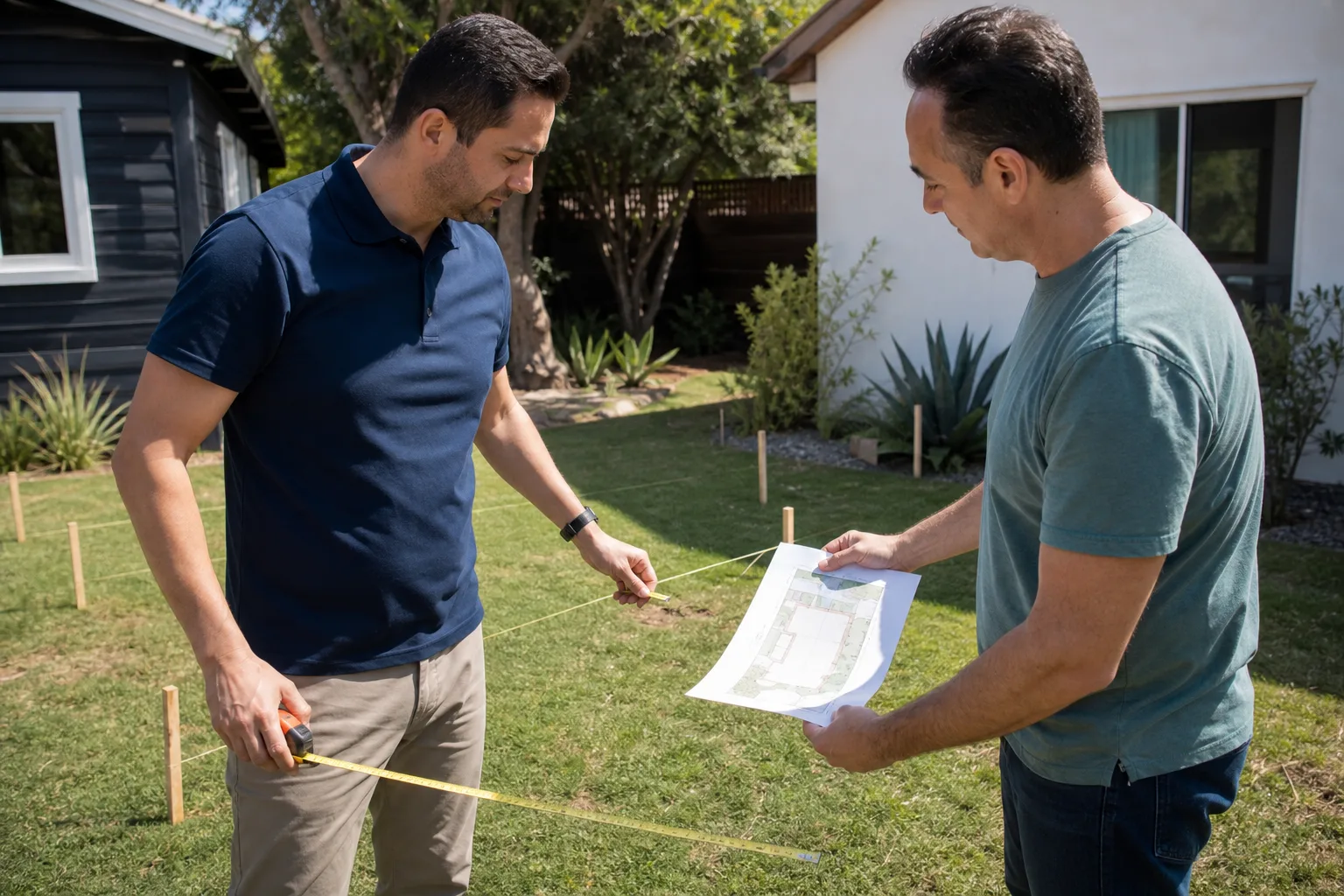
Some of this is genuinely yours to do. You can rake and re-grade a gravel pad that’s settled, you can clear brush and mark where you want the shed to sit, and you can confirm which wall has the electrical knockout before anyone arrives. That’s useful work, and it saves you money.
What you shouldn’t DIY is anything involving the main electrical panel, concrete work over 3 yards, or trenching near existing utility lines. Tying into a live panel without training is how people get hurt, and hitting a buried gas or water line turns a $2,000 project into a $12,000 emergency. We’ve fixed enough homeowner concrete pours in Houston to say this plainly: doing the slab wrong the first time costs double what doing it right would have cost. Call us at (940) 242-3207 and we’ll give you a written price before any dirt moves.
FAQs
A properly built concrete slab on compacted Houston soil lasts 20 – 30 years, while a gravel pad should give you 10 – 15 years before it needs regrading, assuming it was built with the right drainage slope from day one. Most failures we see trace back to skipped compaction or flat grading, not age. Call (940) 242-3207 and we’ll tell you honestly which condition your pad is in.
Sometimes, yes. A settled gravel pad can usually be regraded and re-compacted for far less than a rebuild, and isolated concrete cracks can be patched and resealed if the base is still sound. But if the slab has shifted or cracked due to poor drainage, repair is a band-aid; the water problem will wreck it again. Call us and we’ll tell you which situation you have, with a quote either way.
A gravel pad with simple electrical trenching takes 1 – 2 days on site, while a concrete slab with utility rough-in is typically 3 – 5 days including cure time before the shed sits on it. Houston weather can stretch that: a hard rain the day before a pour means we wait until the subgrade dries out. We’ll give you a schedule in writing when you call (940) 242-3207.
We keep the common gear on board: gravel, compacting equipment, anchor bolts, weatherproof subpanels, conduit, and the fasteners that match Tuff Shed bottom plates. If we need something unusual, like a specific service mast or a specialized anchor system for flood-prone lots, we source it same-week from Houston suppliers. You’ll know before we start, because the written price covers everything we plan to use.
Written by Miles Hartwell, Owner, Sutton ADU Houston at Sutton ADU Houston, serving Houston and nearby areas.