Tuff Shed Junior ADU Conversion: The Houston Owner’s Guide
A Tuff Shed Junior ADU conversion in Houston typically runs $85,000 to $145,000 installed, depending on the shed’s condition, the site prep needed, and how much electrical and plumbing work the space requires. Most Houston owners contact us because their Tuff Shed has structural fatigue, a failing floor system, or they’ve realized the standard shed package was never built to handle sheetrock, insulation, and a mini-split. We stock the conversion materials and hardware that Tuff Shed structures commonly need, and we can usually start a site assessment within a few days of your call.
What usually happens is this: the shed went up fine, it worked as storage for a few years, then someone decided to turn it into a studio or in-law suite and that’s when the weak points show up. The floor joists sag under real furniture. The wall studs aren’t spaced for drywall. The roof structure isn’t rated for insulation and a ceiling. None of that means the shed is junk. It means the conversion needs a builder who understands what Tuff Shed actually shipped versus what a livable Junior ADU requires under Houston code.
Sutton ADU Houston is an independent contractor, not affiliated with Tuff Shed. That matters because we’re not trying to sell you another shed. We’re converting the one you already own, and we’ll tell you straight if the structure is worth converting or if you’d be better off starting fresh.
Which Tuff Shed Models This Applies To
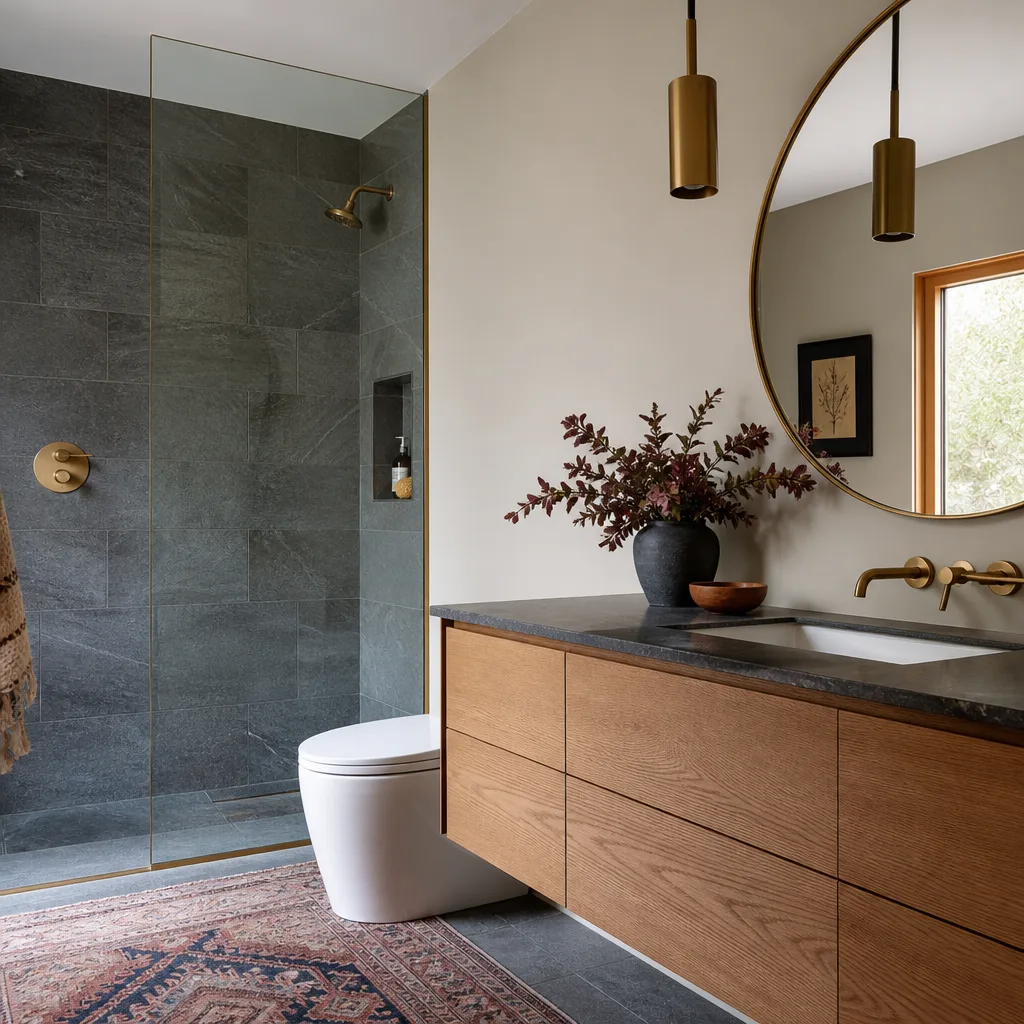
Most Houston Junior ADU conversions we do involve Tuff Shed’s Premier Pro series, the Tall Barn, or the Wide Barn models. These are the lines with enough wall height and roof pitch to meet the minimum ceiling requirements for habitable space. The standard Ranch and Garden series sheds rarely qualify because the walls are too low and the roof framing isn’t designed for interior ceiling loads.
The easiest way to identify what you have is to check the metal placard on the inside of the door frame. It lists the model series, the manufacturing date, and the wind rating the shed was built to. That wind rating matters in Houston. A shed rated for 90 mph wind loads may need additional strapping and anchoring before the city will sign off on it as living space. We’ve seen owners buy a shed in Conroe, move it to a lot in Montrose, and discover the anchoring system doesn’t meet the city’s current wind-resistance requirements for occupied structures.
For the conversion itself, we spec what Tuff Shed’s standard packages don’t include: pressure-treated sill plates rated for ground contact, 16-inch on-center stud spacing (Tuff Shed often uses 24-inch), and a floor system built to support 40 pounds per square foot of live load. The OEM shed is a storage building. The conversion is what turns it into a legal dwelling. Aftermarket materials from suppliers like Simpson Strong-Tie and James Hardie are what actually get the job done, and we stock those on our trucks rather than waiting on Tuff Shed factory parts.
Signs Your Tuff Shed Junior ADU Conversion Is Failing
- Floor bounce or sagging. Tuff Shed floor joists are sized for lawn equipment, not a bed, a desk, and two people walking around. If the floor flexes when you cross the room, the joist spacing or the foundation contact points are undersized. This is the most common issue in Houston, where clay soil movement pushes pier blocks out of level and leaves the floor framing unsupported in the middle.
- Walls sweating or sheetrock warping. The shed’s original wall assembly has no vapor barrier and no insulation cavity. Once you add an air conditioner, warm Houston air hits the cold wall surface inside the stud cavity and condenses. You’ll see it first as bubbling paint, then as soft drywall, then as mold in the corners. This isn’t a cosmetic problem. It’s the wall assembly failing under interior temperature load.
- Doors dragging or refusing to latch. The shed has shifted. Clay soil in Houston expands and contracts with every wet-dry cycle, and a structure that was level in April can be out of square by August. If the door sticks at the top, the floor perimeter has dropped. If it binds at the latch, one corner of the building has settled faster than the others.
- Electrical flicker when the mini-split cycles on. Tuff Shed wiring, where it exists, is minimal. Once you add a real electrical panel, a mini-split, and an appliance circuit, the demand exceeds what the original feeder was meant to handle. Flickering lights when the compressor kicks on is the classic sign of an undersized supply line.
- Roof leaks at the ridge or the gable ends. The original roof metal is fastened to the framing with screws that back out over time as the building flexes. In heavy Houston rain, water follows the fastener holes straight down onto the ceiling. If you catch ceiling staining near a wall, it’s almost always a fastener failure at the roof edge, not a torn membrane.
Replacement Cost & What’s Included
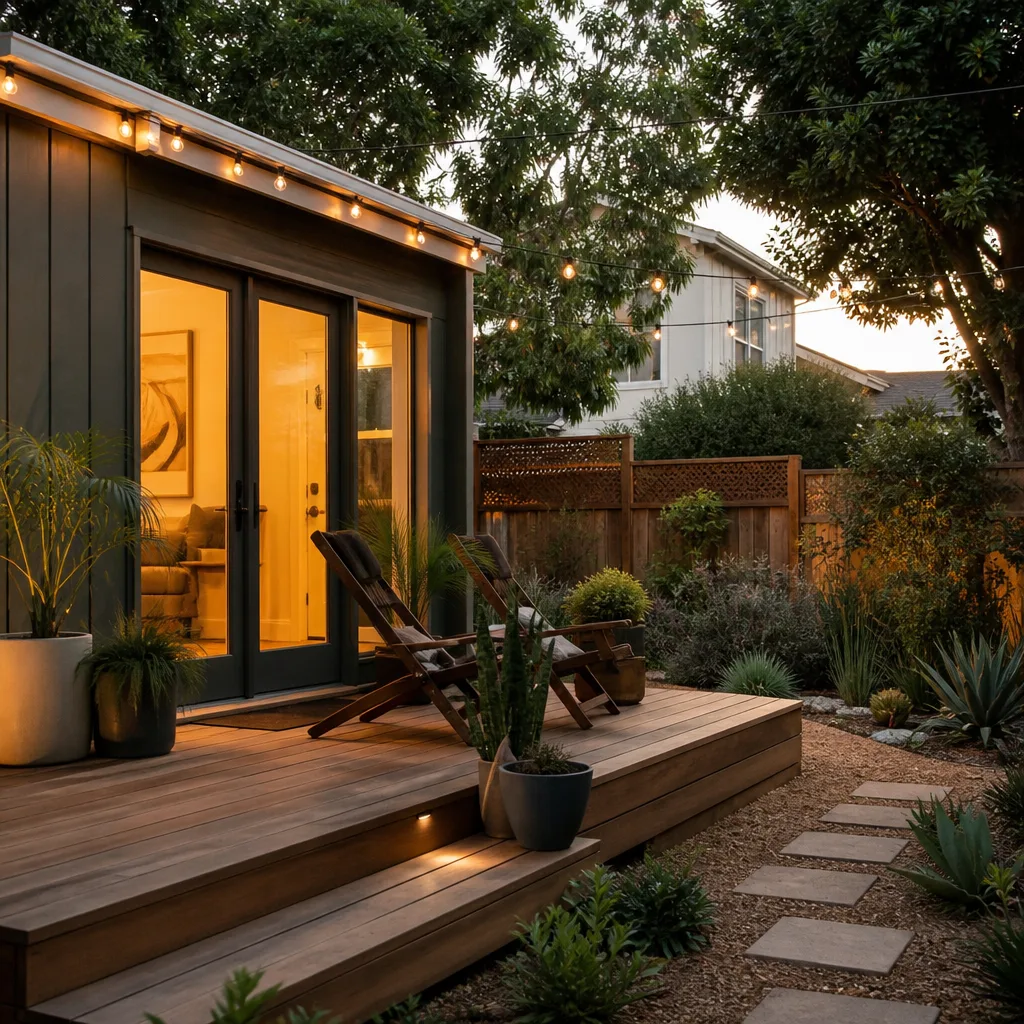
A full Tuff Shed Junior ADU conversion in Houston typically runs $85,000 to $145,000. At the low end, you’re looking at a studio layout under 300 square feet with a basic electrical panel, a mini-split, wall insulation, drywall, and a legal means of egress. At the higher end, you’re adding a bathroom with plumbing under the slab, a kitchenette, upgraded windows rated for a dwelling, and exterior cladding that meets Houston’s requirement for occupied structures in a flood-prone area.
The price range swings on four things: what condition the shed is in after a few Houston summers, whether the lot requires pier replacement or a new poured foundation, how far the electrical service has to run from the main panel, and what the city will require for the certificate of occupancy. We give you a written price before any work starts, and that price includes the parts, the labor, the permit coordination, and the inspection walkthroughs. That written price doesn’t change unless you change the scope and sign off on the change first.
The 365-Day Done Right Promise covers defects in workmanship for one full calendar year from project completion. If something we installed fails inside that year, we come back and fix it at no charge. That’s a written guarantee on every project, not a verbal assurance. And if an element fails after the first visit, the second visit is free too.
DIY or Call Us?
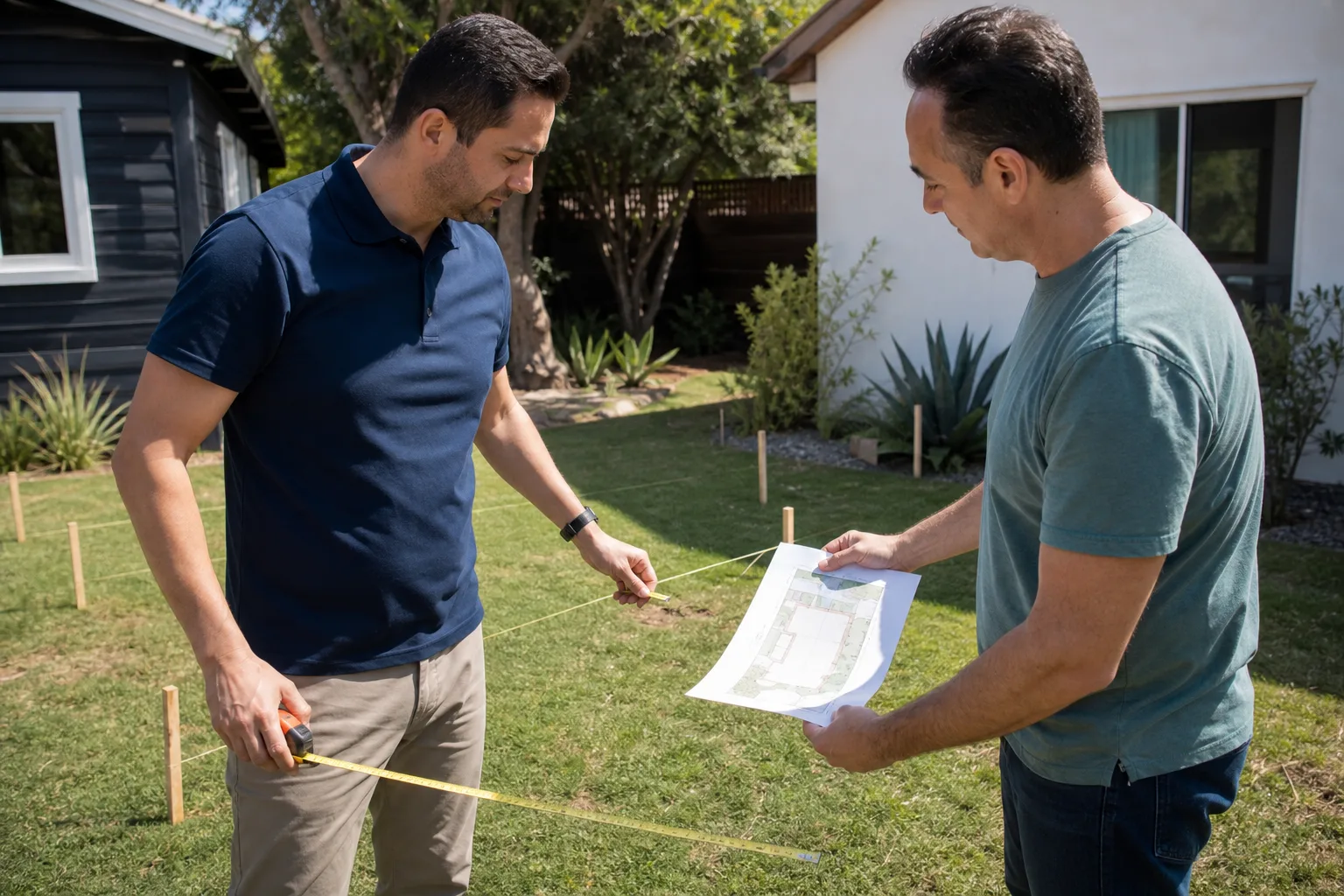
You can safely inspect your own shed: check for floor sag, look for water staining, test the doors, and write down the model number from the door placard. That helps us quote the job faster. What you shouldn’t DIY is anything involving the electrical service, the structural load path, or the foundation. Those are the pieces that keep you safe in a Houston thunderstorm and keep the inspector from failing your occupancy permit.
We’ve seen owners try to save money by running their own wiring or bolting on a lean-to themselves, and it usually costs more to undo than it would have cost to do right the first time. The conversion has to meet Houston’s building code for a dwelling, not for a storage shed. That’s a different standard for wind resistance, electrical grounding, ventilation, and egress. If you’re not sure whether your shed is worth converting, call us at (940) 242-3207 and Miles will walk you through what he sees. Tell me what you actually need the space to do, and we’ll figure out the rest from there.
FAQs
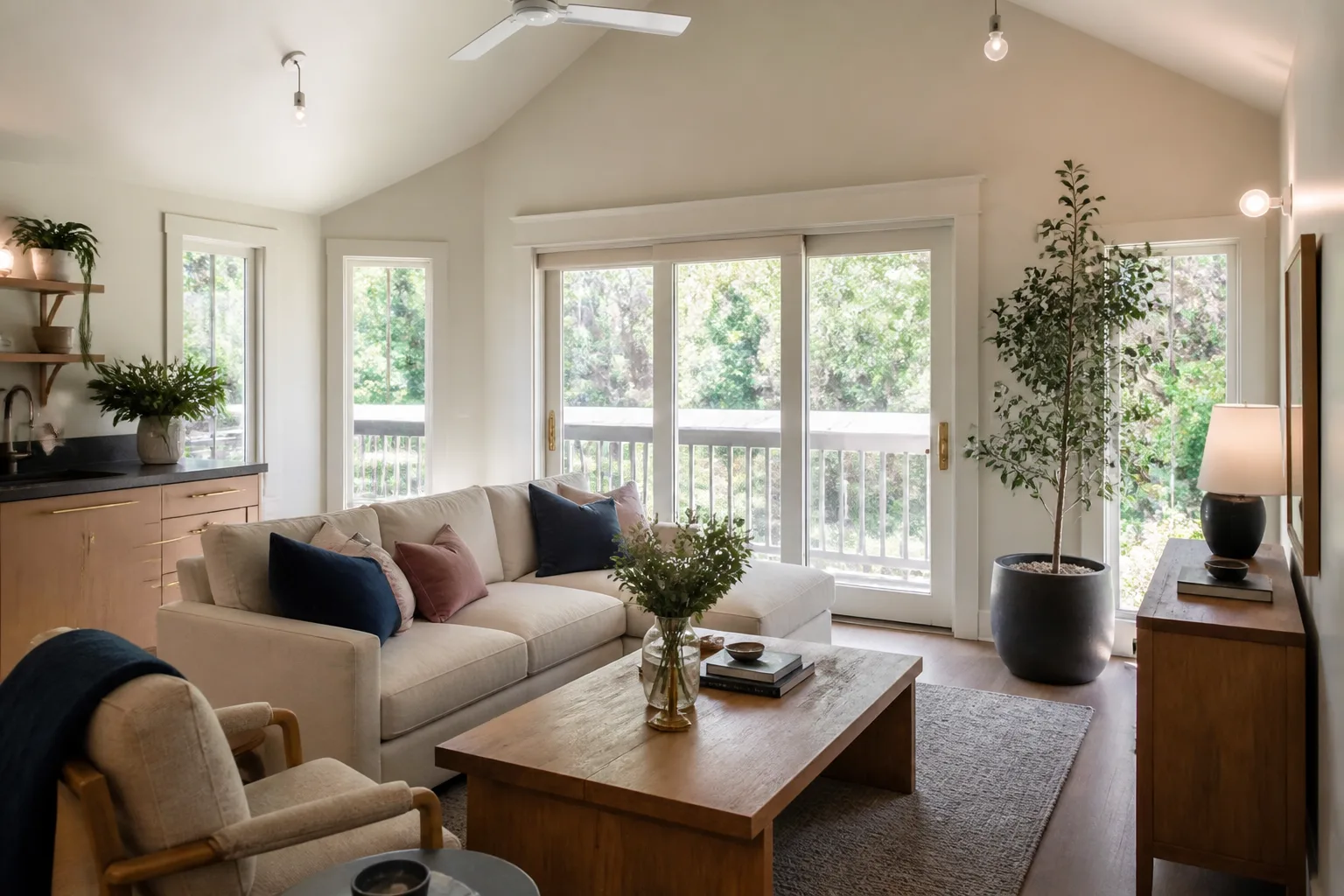
A properly converted Tuff Shed will last 25 to 30 years as living space, but the original shed shell will need reskinning and refastening around year 10 to 12 because Houston’s humidity and clay soil movement work the fasteners loose. The conversion elements we install, like the electrical, insulation, and interior finishes, are what carry the long-term lifespan. The original shed envelope is the piece that needs the most ongoing attention. Call (940) 242-3207 and we’ll give you an honest assessment of what your specific shed can handle.
Yes, if the structural failure is limited to one area, like a sagging floor section or a single wall shifting out of square, we can repair that section and leave the rest of the shed alone. What we can’t do is repair a shed into code compliance if the wall height, roof pitch, or floor load capacity doesn’t meet Houston’s minimum standards for a dwelling. Call us at (940) 242-3207 and we’ll tell you whether you’re looking at a repair or a full conversion.
Most Tuff Shed Junior ADU conversions in Houston take 6 to 10 weeks from first day of work to final inspection, assuming the permit process is already underway. The variables are the foundation work (clay soil pours take longer to cure in summer), the utility connections, and the city’s inspection backlog. We’ll give you a written schedule before we start, and we’ll update you if the city moves the goalposts.
We stock the conversion materials that work across Tuff Shed’s Premier Pro, Tall Barn, and Wide Barn series: pressure-treated plates, structural connectors, insulation, window and door flashing, and the electrical hardware needed to take the shed from storage to dwelling. What we don’t stock is Tuff Shed’s proprietary trim or siding profiles, because those don’t matter for the conversion and you’d be paying a markup for a label. Call (940) 242-3207 with your model number from the door placard and we’ll confirm what applies.
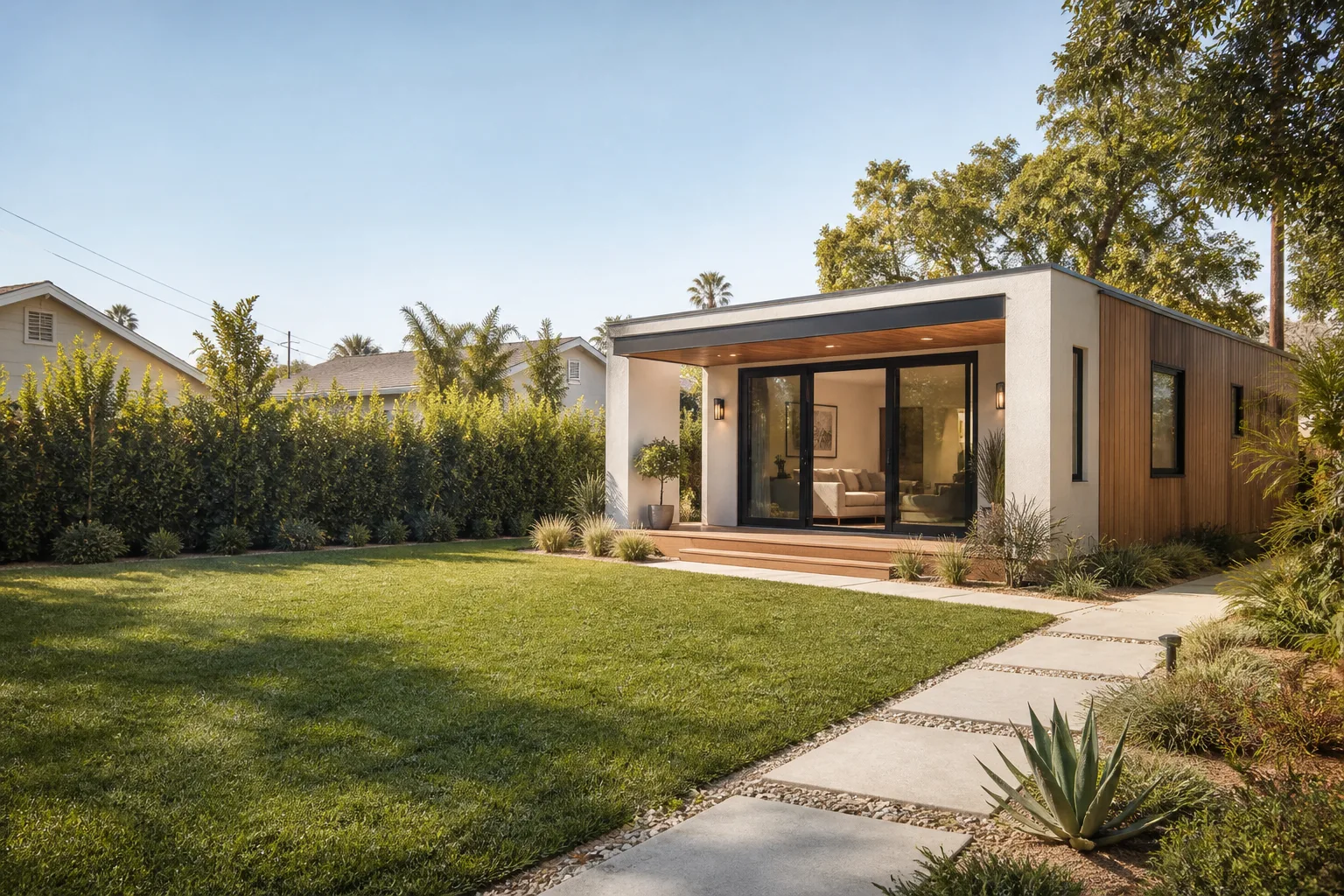
If you own a Tuff Shed in Houston and you’re ready to turn it into a real living space, call Sutton ADU Houston at (940) 242-3207. We’ll come out, look at what you’ve got, and give you a written price that includes everything. We also work with Abodu, Cover, and Dvele systems for homeowners who decide a purpose-built prefab ADU makes more sense than converting the shed they already own. The estimate is free, and the number we give you is the number you’ll pay.
Written by Miles Hartwell, Owner, Sutton ADU Houston at Sutton ADU Houston, serving Houston and nearby areas.