Mighty Buildings Site Prep & Utilities: The Houston Owner’s Guide
Site prep and utility work for a Mighty Buildings unit in Houston typically runs $18,000 – $47,000 depending on lot conditions, utility distances, and foundation type, and most jobs are completed within 2 – 4 weeks once permits clear. We handle the full scope: grading, foundation, trenching, water and sewer tie-ins, electrical service, and final utility connections so your Mighty Buildings module has a clean, code-compliant pad to land on. The most common way owners find us is after a contractor walked the lot and flagged soil movement, drainage, or a utility conflict that stalls the project before the module ever arrives.
If you’re here because your site work is already failing, you’re probably seeing water ponding against the foundation, cracks in the approach slab, a sewer line that backs up in heavy rain, or conduit that settled and pulled away from the panel. Those are Houston-specific problems, and we’ll get into why below.
- Most Mighty Buildings site prep in Houston runs $18,000 – $47,000 installed, with utilities making up roughly 40 – 55% of that total.
- Houston’s expansive clay soil is the number one cause of site prep failure on prefab ADUs, not the Mighty Buildings module itself.
- We stock common site-side components: meter boxes, trenched conduit, cleanouts, shutoff valves, and compaction material, so utility corrections don’t wait on parts.
- Sutton ADU Houston is an independent contractor. We’re not affiliated with Mighty Buildings, but we’ve done this exact scope enough times to know their pad and utility specs cold.
Which Mighty Buildings Models This Applies To
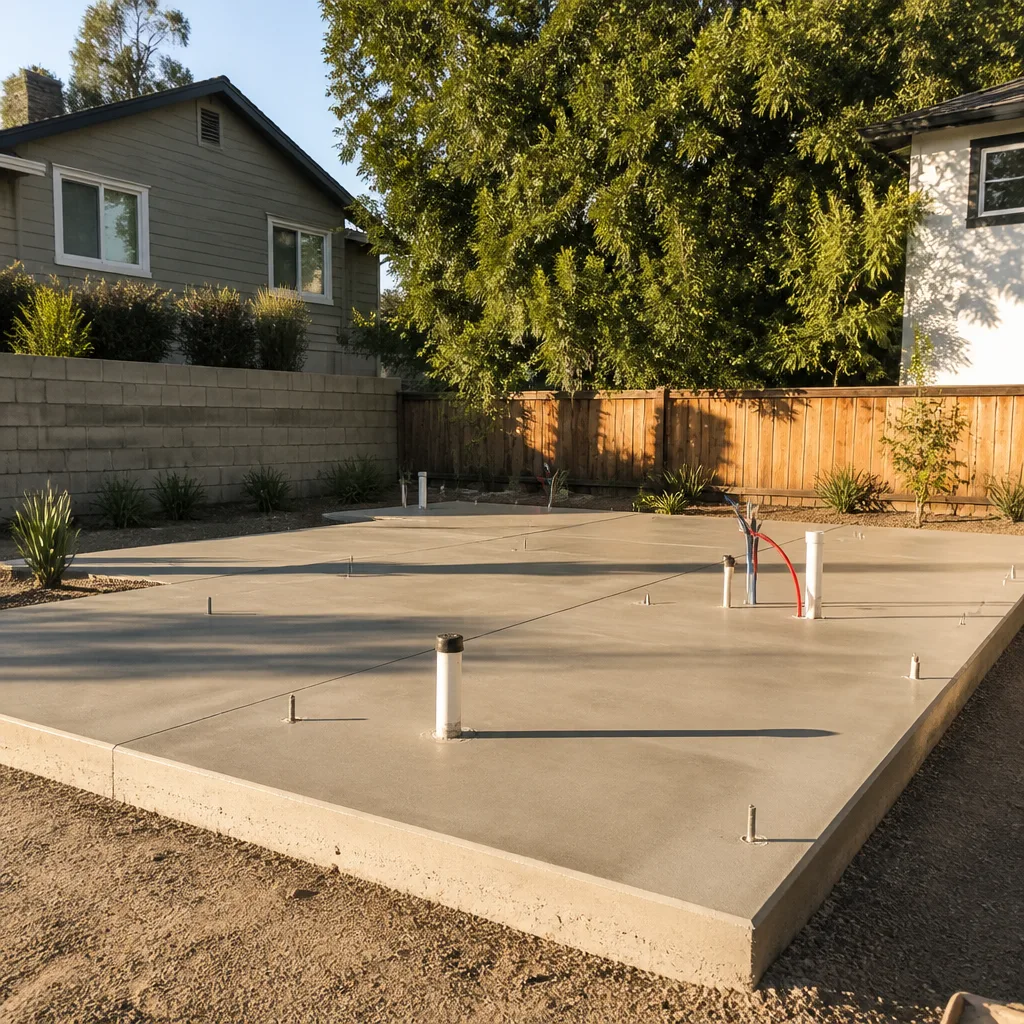
This scope applies to every Mighty Buildings product line we’ve worked with: the Mighty House studio and one-bedroom configurations, the Accessory Dwelling Unit series, and their larger multi-module residential builds. The site prep and utility scope doesn’t change much between models because what changes is pad size, point-load locations, and electrical service amperage, not the fundamental work of making the ground stable and getting water, waste, and power to the right spot on the module’s utility wall.
The one compatibility factor that matters is where your utility stub-outs land. Mighty Buildings modules have fixed utility entry points on a designated wall or corner, and we’ve had projects in Houston where the architect’s site plan showed utilities entering on the wrong side. That’s a survey-level detail, and it’s exactly the kind of thing that turns a clean install into a change order. Before we trench anything, we confirm stub-out locations against the actual module drawings, not a marketing brochure.
On the OEM-vs-aftermarket question: site prep and utilities aren’t proprietary to Mighty Buildings. You don’t need Mighty Buildings-branded conduit, valve boxes, or sewer line. What you need is equipment rated for Houston’s soil, frost line (irrelevant here, but expansion is), and local code. We spec standard materials from local supply houses: schedule 40 PVC for sewer, PEX-A for water laterals, and copper or aluminum feeders per your utility’s service requirements. The one place we won’t cut corners is the transformer and meter base, because CenterPoint Energy has its own spec sheet, and it’s not negotiable.
Signs Your Mighty Buildings Site Prep & Utilities Is Failing
- Water ponding against the pad edge after a normal rain. Houston gets 50-plus inches of rain a year, and if your pad wasn’t graded with positive drainage away from the module, water sits. Over time that softens the bearing soil and starts differential settlement.
- A vertical crack in the approach slab or walkway that widens seasonally. Houston clay swells when wet and shrinks when dry. If the slab wasn’t poured with proper subgrade compaction and a moisture barrier, you’ll see cracking that follows the wet and dry cycles.
- Sewer backups during heavy rain but not during dry weather. This usually means a belly in the line, a shifted joint, or root intrusion at a coupling. The line wasn’t bedded correctly, or a nearby tree found the trench before the soil settled.
- Conduit or water line pulling away from the structure at the entry point. That’s settlement or trench backfill that wasn’t compacted in lifts. The module stays put, but the connection to it starts to stretch or separate.
- An electrical panel that trips more often in summer or flickers when the AC kicks on. Houston’s summer load is brutal, and if the feeder was undersized or the ground connection is degrading in acidic soil, you’ll feel it at the panel before you see it at the meter.
All five of these share the same root cause in Houston: soil movement and water. The module itself is rarely the problem. Mighty Buildings builds a rigid steel-framed unit that doesn’t flex the way stick-frame does. The failure, when it happens, is in the dirt under it and the pipes running through it.
Replacement Cost & What’s Included
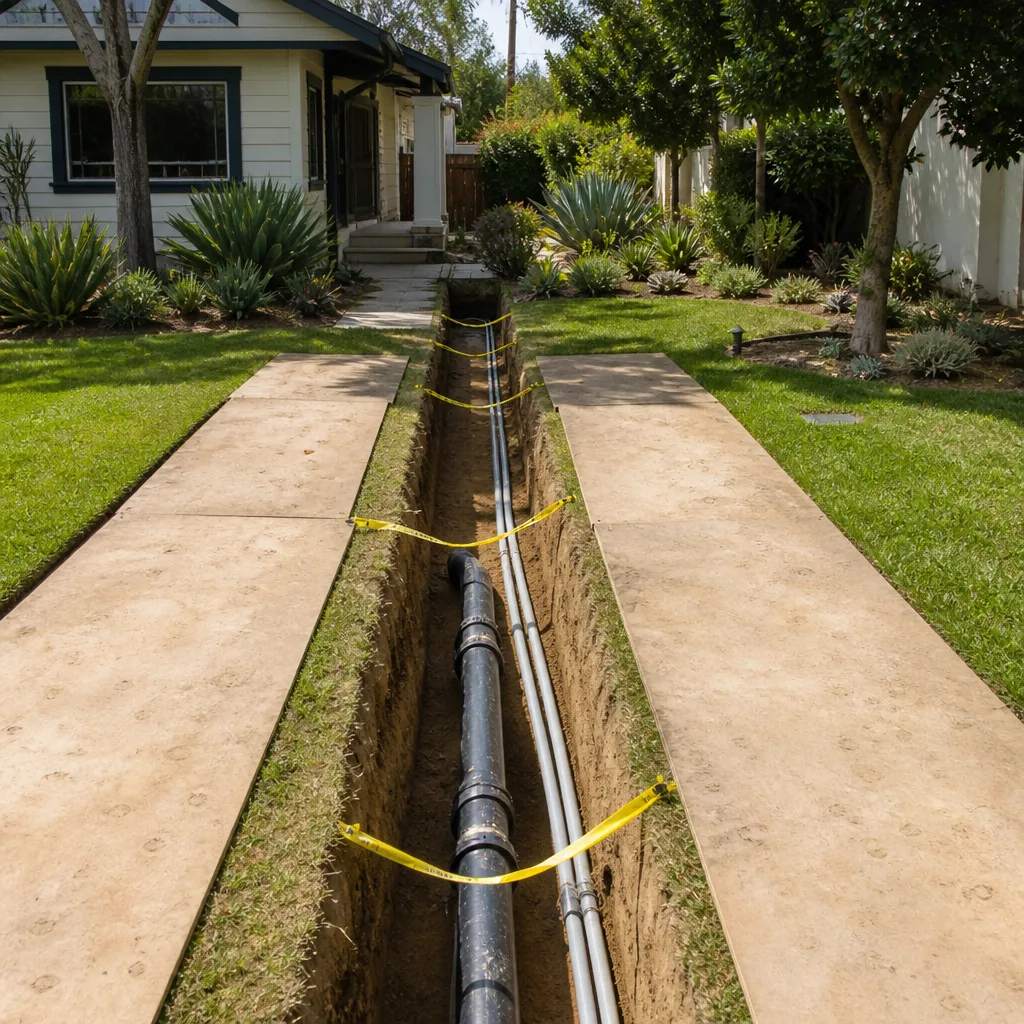
For a Mighty Buildings site prep and utilities scope on a standard Houston residential lot, here’s the range we quote most often:
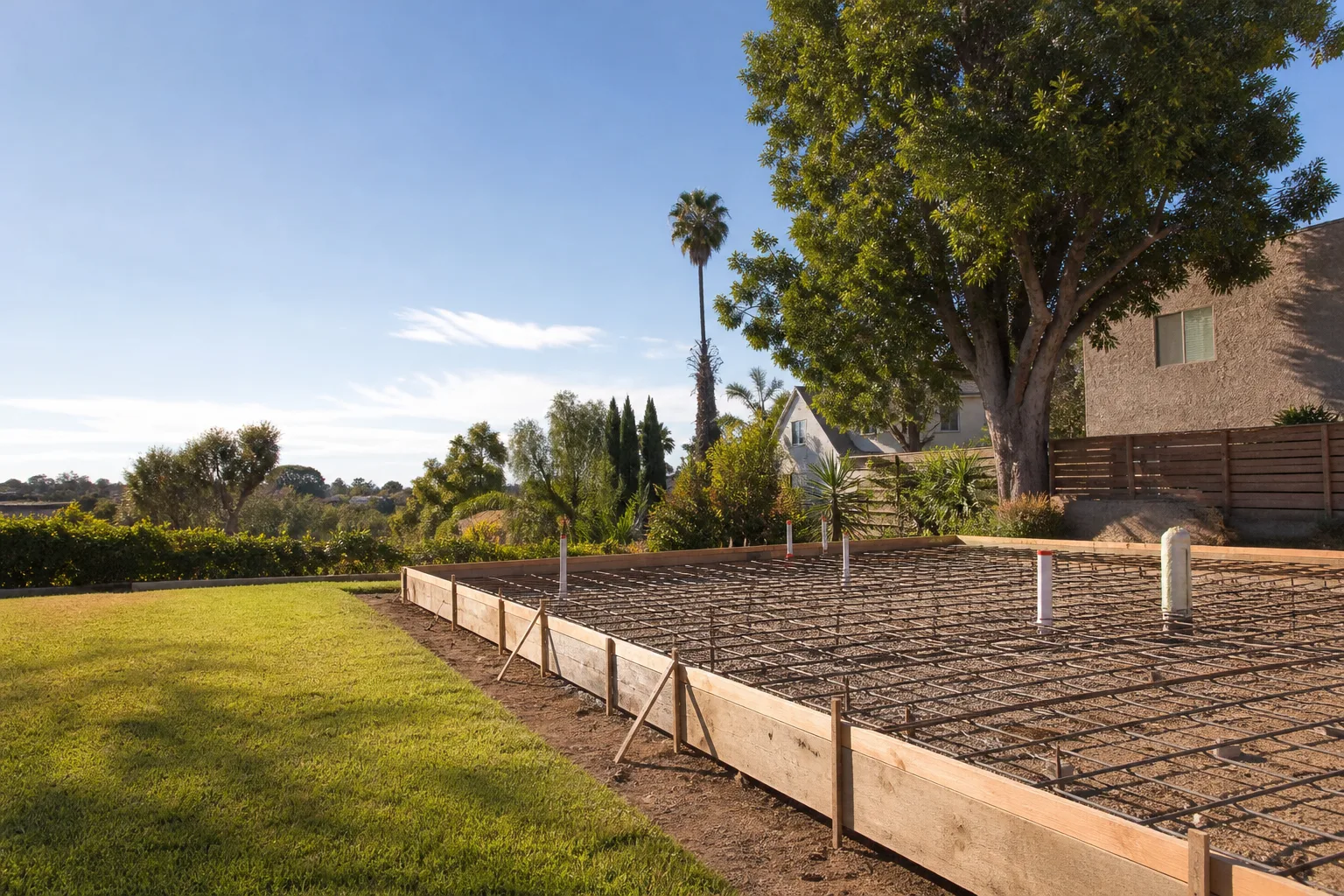
- Full site prep, level lot, utilities within 50 feet of the pad: $18,000 – $26,000. Includes grading, form and pour for a 4-inch slab on grade, trenching, water and sewer laterals, electrical feeder in conduit, and final connections.
- Moderate slope, poor soil, or utilities 50 – 150 feet away: $27,000 – $38,000. Adds pier or reinforced slab work, longer trench runs, possibly a booster pump if sewer elevation is against you.
- Full build-out with substantial grading, retaining wall, or service upgrade from 100A to 200A: $39,000 – $47,000. This is where Houston clay and older neighborhood service lines start adding real money.
Every quote you get from us is a written, line-item price before we move a single shovel of dirt. You’ll see the cost of materials, labor, permits, and disposal separated out. If nothing changes on site, that number doesn’t move. If we hit something unexpected, like an unmarked gas line or buried construction debris, you’ll know about it and approve the change before we spend a dollar. That’s the Threshold Standard, and it’s how we’ve run every project since 2006.
All site prep and utility work carries the 365-Day Done Right Promise. If a slab cracks, a line settles, or a connection leaks within one full calendar year of completion, we come back and make it right at no charge. That’s a written guarantee, not a handshake.
DIY or Call Us?
Site prep and utility work is not a DIY category. There’s no safe version of hand-trenching a gas or electrical line, and messing with a live sewer lateral or a panel feeder can turn a $3,000 utility correction into a five-figure repair or a hospital visit. What you can do safely is document what you’re seeing: take photos of the ponding, mark where the cracks are, note which fixtures back up, and check whether the problem gets worse after rain. That’s genuinely useful information when you call us.
What you shouldn’t do is dig. Houston has a web of unmarked private lines on older lots, and 811 only marks public utilities. If you’re seeing active settling or water intrusion, leave it alone and call us at (940) 242-3207. We’ll send someone who knows what’s under the ground before we open it up.
FAQs
A properly compacted pad with correct drainage and a moisture barrier should last 30 to 50 years in Houston, with the usual caveat that expansive clay will keep doing what expansive clay does. The failure points are almost always in the first three years, which is why our 365-Day Done Right Promise catches the early signs while they’re still small. If you’re past that window and seeing movement, call us at (940) 242-3207 for a site assessment.
In most cases it can be repaired: mud-jacking or polyfoam lifting for settled slabs, trench re-compaction for shifted lines, and regrading or French drains for drainage problems. A full tear-out and re-pour is rare and usually only needed when the subgrade was never compacted in the first place. We’ll tell you which one you’re dealing with before we quote it, because the difference is $4,000 versus $30,000. Call (940) 242-3207 and we’ll take a look.
Plan on 2 to 4 weeks once permits are approved, with grading and foundation taking the first week, utility trenching and rough-in the second, and final connections and inspection the third or fourth. Houston’s permit office and CenterPoint Energy service scheduling add time we can’t control, but we’ll give you a realistic schedule at the quote stage. The number to call is (940) 242-3207.
We keep the common site-side components on the truck: schedule 40 sewer pipe, PEX fittings, conduit sweeps, cleanouts, shutoff valves, and meter bases. For anything specialized, like a specific CenterPoint-approved transformer or a custom retaining wall block, we source locally and it’s usually in hand within three days. If you’re mid-project and a utility component has failed, call (940) 242-3207 and we’ll tell you if we’ve got it or when it lands.
Written by Miles Hartwell, Owner, Sutton ADU Houston at Sutton ADU Houston, serving Houston and nearby areas.