James Hardie New Detached ADU: The Houston Owner’s Guide
Planning a new detached ADU with James Hardie siding in Houston means getting the exterior system right from day one. A properly installed HardiePlank or HardiePanel exterior on a detached ADU typically runs $8,500 to $22,000 for materials and installation, depending on square footage, trim complexity, and whether you’re using standard lap siding or the more expensive panel-and-batten look. Most Houston homeowners first realize they need replacement or new-install help when they notice warped boards, nail pops, or water staining around window trim on an existing structure.
We’re Sutton ADU Houston, and we install and repair James Hardie exterior systems on detached ADUs across the Houston area. We’re an independent contractor, not affiliated with James Hardie directly, which means we can tell you straight when a product works and when a different brand might serve you better. Miles Hartwell runs our Houston crew, and he’ll tell you the same thing he tells every homeowner: Houston’s humidity and clay soil do things to exterior materials that the brochures never mention.
Which James Hardie Models This Applies To
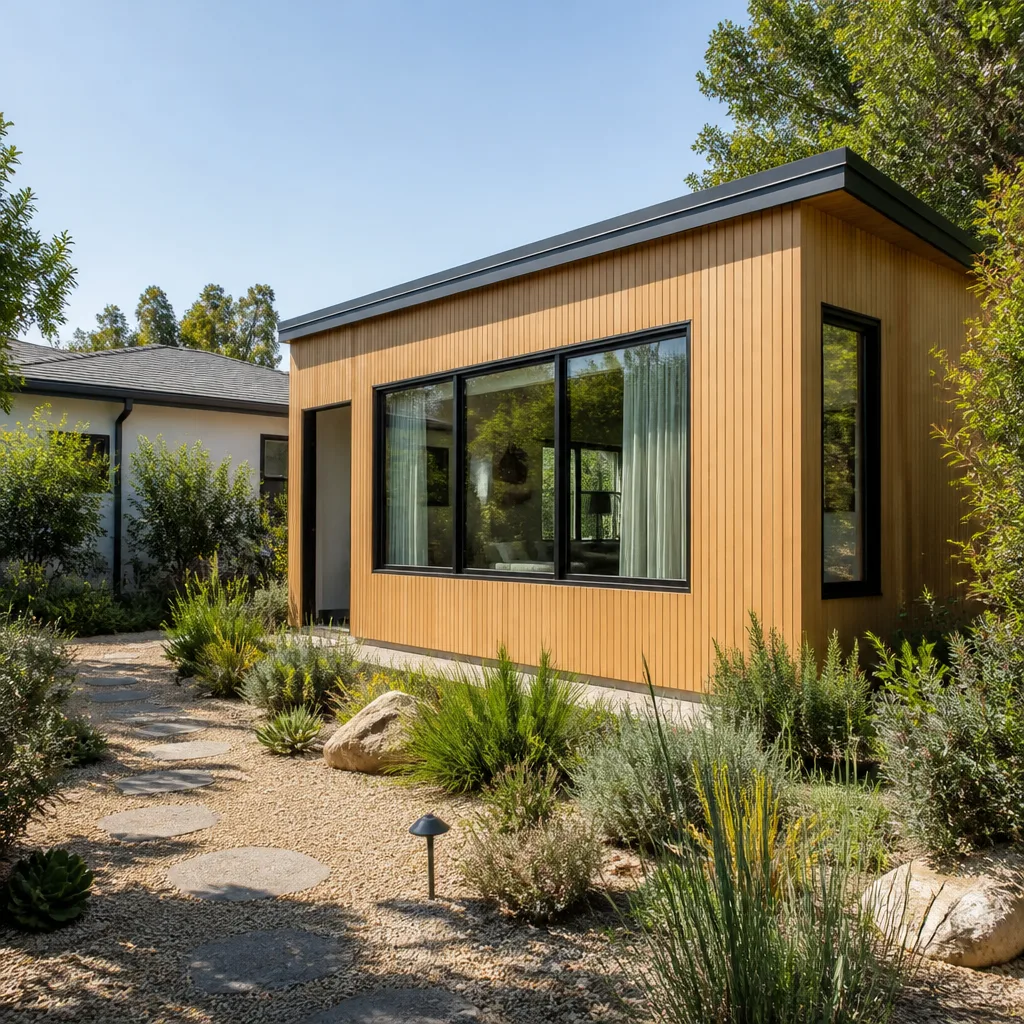
James Hardie makes three primary siding product lines that show up on detached ADUs in Houston: HardiePlank lap siding, HardiePanel vertical siding, and HardieShingle. The lap siding comes in 4×8, 5.25×12, 6.25×12, 7.25×12, and 8.25×12 exposure widths, with the 6.25-inch exposure being the most common choice on ADU builds because it gives a clean residential look without the cost premium of the wider boards. HardiePanel comes in 4×8, 4×9, and 4×10 sheets, and the 4×8 sheet is standard for most ADU exteriors.
Here’s the compatibility gotcha most Houston owners run into: James Hardie changed their fiber cement formulation in 2021, and the newer boards are slightly denser. That means if you have an ADU built before 2021 and need to replace a few damaged boards, the new boards won’t be a perfect color or thickness match to the old ones. You’ll need to either paint the entire exterior or accept a visible transition seam. We stock current-production HardiePlank and HardiePanel in the most common Houston colorways, plus we can order color-matched trim and fascia within three to five business days.
For aftermarket equivalents, we generally don’t recommend them for James Hardie systems. The fiber cement market has a few cheaper competitors, but the warranty registration and color consistency aren’t worth the $4 to $7 per board you save. On a detached ADU that’s 600 to 800 square feet, the total siding material cost difference between genuine Hardie and generic fiber cement is usually under $1,200. That’s not where you want to cut corners in a Houston climate.
Signs Your James Hardie New Detached ADU Is Failing
- Nail pops and board lifting at the bottom course. Houston’s expansive clay soil shifts with every wet-dry cycle, and that movement transfers through the foundation into the wall framing. When the framing moves, the nails holding Hardie boards work loose, and you’ll see the bottom edge of the boards start to lift away from the sheathing. This is the most common failure we see on Houston ADUs under ten years old.
- Wicking stains climbing up from the bottom edge of the siding. If the original installer didn’t leave the required 2-inch clearance between the bottom of the Hardie boards and grade, or the soil was graded toward the structure, capillary action pulls groundwater up into the fiber cement. Houston’s heavy rains make this a fast-moving problem once it starts.
- Caulk lines cracking along window and door trim. Hardie boards expand and contract with temperature changes, and Houston’s swings from 95-degree August afternoons to 40-degree January mornings put real stress on every caulk joint. When the caulk fails, water gets behind the siding, and fiber cement that stays wet loses structural integrity. You’ll see boards getting soft or crumbling at the edges.
- Visible swelling or delamination at board ends. Fiber cement is water-resistant, not waterproof. When butt joints between boards weren’t flashed correctly or the boards were cut and the cut edges weren’t sealed, water enters through the end grain and the board starts to swell. Once a Hardie board swells, it won’t return to its original shape.
- Mold streaking on the south-facing wall. Houston’s heat and humidity create ideal conditions for mildew growth on any exterior surface, but James Hardie’s factory finish includes mold inhibitors. If you’re seeing black or green streaks that don’t wash off with a garden hose, the protective finish has degraded and the boards need paint or replacement.
Replacement Cost & What’s Included
A partial siding repair on a detached ADU in Houston runs $1,800 to $6,500 depending on how many boards are involved and whether the underlying water damage reached the sheathing. A full re-side of a 600-square-foot ADU with new HardiePlank, including tear-off of the old siding, new housewrap, repainted trim, and haul-away, typically runs $11,000 to $19,000. A full re-side with HardiePanel and battens runs higher, usually $14,000 to $22,000, because the batten layout requires more cutting and the panel sheets are more expensive per square foot than lap boards.
Every quote we give is a written line-item price before any work starts. You’ll see exactly what the materials cost, what the labor costs, and what the disposal fees run. The 365-Day Done Right Promise covers defects in workmanship for one full calendar year from project completion, and if something we installed fails in that window, we come back and fix it at no charge. No haggling, no fee.
DIY or Call Us?
You can safely check a few things yourself: look for visible nail pops by walking the perimeter with a good flashlight, check that downspouts are directing water away from the foundation, and feel along the bottom edge of the boards for soft spots. Those checks help you catch problems early and give us useful information when you call.
What you shouldn’t attempt is removing and replacing Hardie boards yourself. Fiber cement cuts produce silica dust that requires a proper respirator, not a paper mask. The boards are heavy, they break if handled wrong, and getting the flashing details right so you don’t create a worse leak than the one you’re fixing takes a trained hand. Houston’s building code also requires permits for siding replacement on a detached structure if more than 25% of the exterior is involved. We pull permits and handle the inspections as part of every job. Call (940) 242-3207 and we’ll walk you through what you’re seeing.
FAQs
James Hardie siding carries a 30-year transferable limited warranty, but real-world lifespan in Houston’s humidity and clay soil conditions runs 25 to 40 years depending on installation quality and how well the homeowner keeps the caulk lines and paint maintained. The warranty covers manufacturing defects, not installation errors, which is why the installer matters as much as the product. Call (940) 242-3207 and we’ll tell you honestly whether your siding is worth repairing or re-siding entirely.
Minor edge chipping and hairline cracks at nail holes can sometimes be repaired with an exterior-grade fiber cement patching compound, but any board with swelling, delamination, or water damage behind the surface needs to be replaced. The fiber cement has lost its structural integrity and patching won’t stop the underlying moisture problem. We’ll give you a straight answer when we look at the damage.
A complete HardiePlank re-side of a 600 to 800 square foot ADU in Houston takes 5 to 8 working days in good weather. Tear-off and sheathing inspection takes the first day, housewrap and flashing the second, and the remaining days go to hanging boards, caulking, and painting trim. Weather delays in Houston’s spring and fall rain seasons can stretch that timeline, and we’ll tell you at the start if rain is in the forecast.
Our crews carry the most common HardiePlank exposures and colors on the truck, which means we can often start a partial repair the same day we diagnose it. Full re-sides and color-matched trim typically require a 3 to 5 day order window from our Houston supplier. We’ll tell you at the estimate visit exactly what’s in stock and what’s on order, with a firm date for the start of work.
Tell me what you actually need the space to do, and we’ll figure out the rest from there. If you’re looking at damaged siding, planning a new detached ADU with James Hardie exterior, or converting an existing structure and need honest guidance on which product line fits your lot and budget, call (940) 242-3207 for a free estimate. We work with Abodu, Cover, Dvele, and other prefab brands when the project calls for it, and we’ll help you choose the right exterior system without pushing you toward the most expensive option.
Written by Miles Hartwell, Owner, Sutton ADU Houston at Sutton ADU Houston, serving Houston and nearby areas.