Cover Site Prep & Utilities: The Houston Owner’s Guide
Site prep and utility rough-in for a Cover unit in Houston typically runs $9,500 to $24,000 depending on soil conditions, lot slope, and how far utility lines need to run from the main house. We stock the commonly failed components on our trucks, so most issues get diagnosed and replaced in one visit. Cover units are panelized and arrive on a flatbed, but everything that happens before that truck pulls up to your curb, drainage, compaction, trenching, meter connections, that is where we spend most of our time on warranty follow-ups and repair calls.
In practical terms, if your Cover unit is settling unevenly, if water pools at the foundation edge after rain, or if your water pressure climbs and drops without explanation, the problem is almost never the unit itself. Cover builds a tight envelope. What fails in Houston is what connects that envelope to the ground and to city utilities. We see this with every prefab brand we service, including Abodu and Dvele installations, because Houston has its own set of rules under the surface.
Key Takeaways:
- Installed site prep and utility rough-in for Cover units in Houston runs $9,500 – $24,000, with most failures costing far less to repair than to redo.
- We stock the common failure points on the truck: trench drains, backflow preventers, pier shims, and utility stub-out seals.
- We are an independent Houston service provider, not affiliated with Cover. The benefit is honest triage: we fix what is broken, not what a warranty flowchart tells us to check first.
Which Cover Models This Applies To
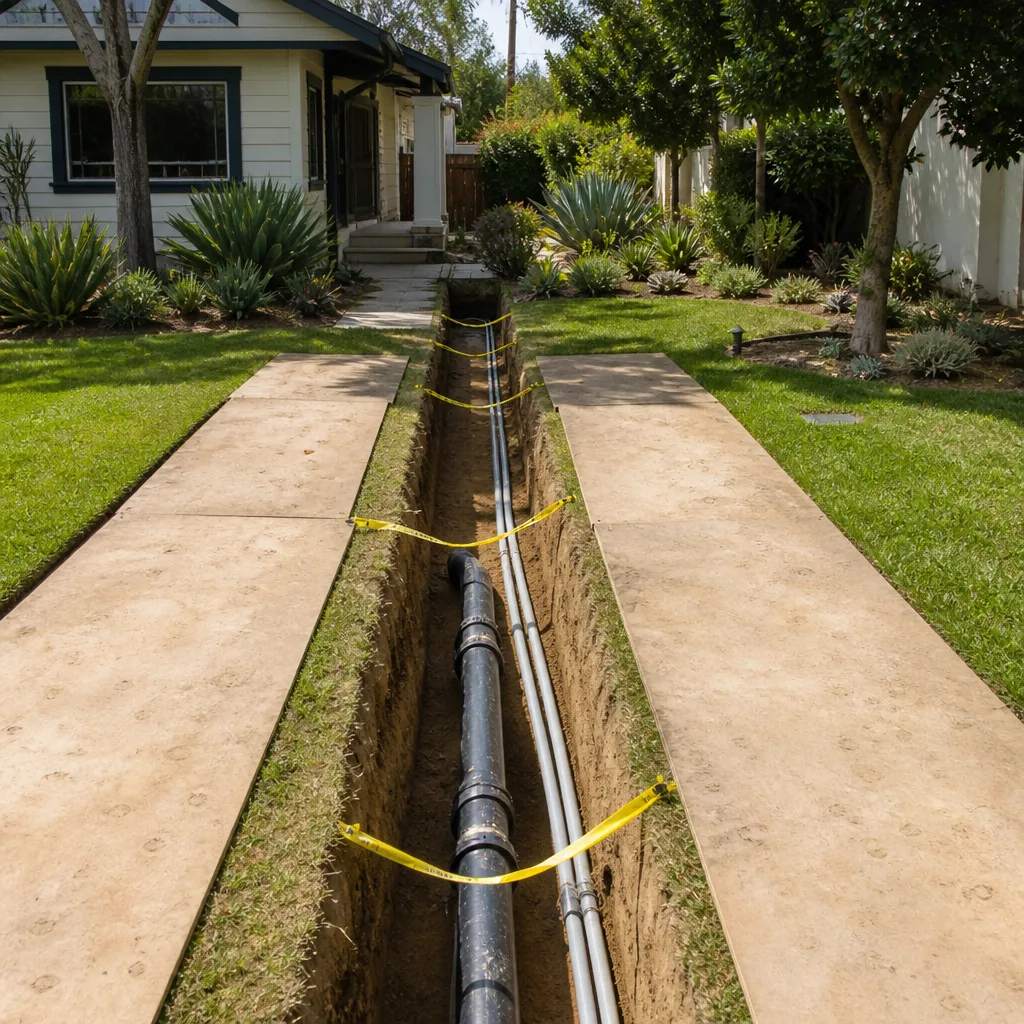
Cover builds on a proprietary steel chassis with pier-and-grade-beam support, and the site prep requirements are largely the same across their Backyard Series, their two-bedroom model, and their studio layouts. Where you will see a difference is in the utility connection points. Older Cover units, roughly the S1 and S2 generations, used a centralized utility chase on the long wall. Newer units route water, power, and sewer to a consolidated stub-out at one corner, which makes trenching cleaner but also means a single failed fitting can put pressure on everything downstream.
If you are trying to identify what you have, look at the utility panel door. The newer Corner Connect system is labeled with a small C logo next to the electrical breakers. The older S-series uses a rectangular wall plate roughly 18 inches wide with no logo. The distinction matters when ordering replacement parts, because the shutoff valves, backflow preventers, and trench drain kits are not interchangeable between the two. We keep both option lines stocked because we have learned the hard way that guessing here wastes a site visit.
On the OEM-versus-aftermarket question for Cover specifically: their branded site components, the pier brackets, the seismic tie-down hardware, even the trench drain channels, are manufactured to decent spec, but they carry a lead time that can stretch to three weeks when ordered direct. For most mechanical site components, we use PEX-grade fittings and schedule 40 risers from supply houses we trust, and we have never had an aftermarket equivalent fail where the OEM part would have held. The exception is the proprietary chassis-to-pier connection bracket. We will always recommend Cover’s OEM bracket there, because the tolerance is tight and an aftermarket bracket that is off by even an eighth of an inch will telegraph uneven load through the frame.
Signs Your Cover Site Prep & Utilities Is Failing
- Water pooling along one edge of the foundation after a normal Houston rain. This points to failed compaction under that corner or a blocked trench drain. Houston’s clay soil expands and contracts aggressively, and we see more of this in neighborhoods like Montrose and the Heights where mature tree roots have shifted old utility lines.
- Doors inside the unit start sticking or rubbing in a way they did not six months ago. Panelized structures are rigid, so this is almost always pier settlement, not a hinge problem. One pier dropping a quarter inch will show up at the door frame before anywhere else.
- Water pressure spikes and drops while a single fixture runs. That is a classic failing backflow preventer or a partially crushed supply line where it passes under a walkway. Houston’s clay moves after wet winters, and shallow supply lines pay the price.
- Sewer odor near the utility stub-out on humid mornings. A dried or displaced wax seal ring at the stub-out, or a crack in the sewer riser. With Houston’s water table this close to the surface in many areas, even a small crack stays wet.
- Your electrical panel shows intermittent tripping on a dedicated Cover circuit. In about half the cases we trace this to a utility trench that was not backfilled with clean fill. The conduit settles, the wire sheath wears against stone, and moisture does the rest.
Replacement Cost & What’s Included
Here is an honest look at what we charge in Houston for the most common repairs, laid out plainly so you can self-qualify before calling:
| Repair | Installed Range | Time on Site |
|---|---|---|
| Pier re-shim / re-level (per pier) | $180 – $340 | 1 – 2 hours |
| Trench drain replacement (10 – 20 ft run) | $850 – $1,750 | Half day |
| Backflow preventer replacement | $420 – $780 | 1 – 2 hours |
| Supply line repair (under walkway) | $1,200 – $3,800 | 1 – 2 days |
| Full site prep + utility rough-in (new unit) | $9,500 – $24,000 | 1 – 3 weeks |
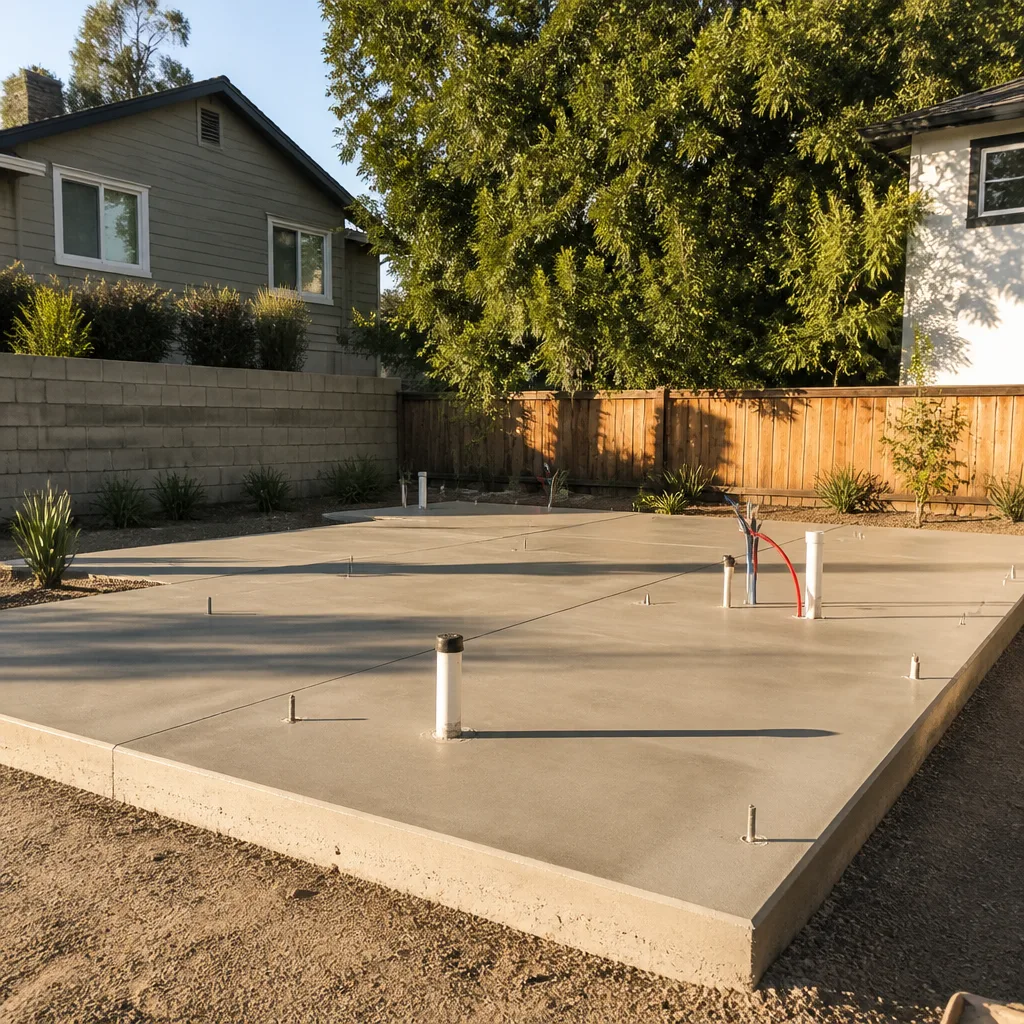
The range on full site prep depends on two things: how deep we have to go to hit stable bearing soil, and how far the utility runs are from your main panel and water meter. Houston lot depths vary wildly, and pulling a trench across a 90-foot backyard in the summer takes longer and costs more than the same work on a 40-foot lot. The labor is where the number moves; materials are predictable. Every quote is a written price before work starts, itemized, with no change orders unless you add scope. The 365-Day Done Right Promise covers our workmanship on repairs for a full calendar year.
DIY or Call Us?
There are a few things you can safely check yourself. Walk the foundation perimeter after a rain and photograph where water sits. Read your water pressure gauge at the hose bib nearest the unit. Check that the trench drain grates are seated and not packed with silt. None of these require tools, and all of them save us a diagnostic hour.
What you should not do is dig. Houston utility easements run at shallow depths in older neighborhoods, and a shovel through a buried gas line or a live electrical conduit in your backyard is a life-threatening scenario, not a weekend project. Utility locates are free through Texas 811, but even with locates done, trenching near an occupied dwelling is not a job for a rented trencher and a YouTube tutorial. We have repaired enough DIY trench damage to say that with a straight face. Call it in, or call us at (940) 242-3207 and we will scope it properly.
FAQs

A properly compacted pier system with drainage installed to Houston clay conditions will last the life of the structure, but utility stub-out seals and backflow preventers realistically need attention every 7 to 10 years in this climate. The heat and soil movement just work them harder than the manufacturer’s baseline assumes.
In most cases, yes. A settling pier can be shimmed and re-seated without disturbing the unit above it, and a trench drain with a cracked channel can often be spliced with a new section rather than replaced run for run. We will tell you when a repair buys you five more years versus when replacement is the only honest call.
Most single-point repairs, a shim, a valve, a drain section, are done in under four hours on site. Anything involving a trench across a Houston backyard or re-compaction under a pier runs one to two days because the ground has to settle and be tested before we call it done.
We keep the common failure components on the truck at all times: pier shims in both sizes, trench drain channels, backflow preventers rated for Houston water pressure, and the OEM chassis-to-pier brackets for Cover’s current Corner Connect system. For full-site work on a new unit, we order materials per project once the written quote is approved.
No. The price we put in writing before we start is the price you pay. The only time a number changes is if you ask us to add scope, and we will get your approval in writing before that work happens. That is the Threshold Standard, and it applies to every repair we do in Houston, not just new builds.
If your Cover unit is sitting on shifting ground or your utilities are acting up, call us at (940) 242-3207. We will give you a straight answer about what is actually wrong, a written price to fix it, and a name and photo of the technician before they knock on your door.
Written by Miles Hartwell, Owner, Sutton ADU Houston at Sutton ADU Houston, serving Houston and nearby areas.