Permit Application in Houston, TX
Permit application for an ADU or room addition in Houston typically takes 3 to 8 weeks for city review, and the filing fees range from $1,500 to $6,000 depending on your project’s size and whether you’re building detached or converting existing space. Sutton ADU Houston handles the entire application from survey and drawings through plan review corrections, so you’re not left re-submitting paperwork on your own. Call (940) 242-3207 and we’ll tell you whether your project is likely to need a full plan review, a simple residential permit, or something in between.
This page covers what permit application actually involves for Houston homeowners, what it costs, and how our process works as part of our broader ADU Design & Permitting service. If you’re still deciding between a detached ADU, a garage conversion, or a room addition, start there.
Key Takeaways
- Houston permit review for ADUs and additions runs 3 to 8 weeks on average, and plan revision requests add time.
- City of Houston filing fees plus third-party costs (surveys, engineered drawings, energy calcs) usually land between $1,500 and $6,000.
- Sutton ADU Houston submits the application, tracks it, and answers every plan review comment until the permit is issued.
- Your price for the application portion is written down before we file anything. No hourly billing surprises.
- Every Sutton field technician who comes to your property is background-checked, identity-verified, and photo-badged under the Threshold Verified standard, with their name and photo sent to you before they arrive.
When You Need Permit Application
If you’re adding livable square footage inside Houston city limits, you almost always need a permit. Not every contractor tells you that. Some will suggest skipping it, and that’s a decision you’d be paying for twice: once in the work, again when you try to sell the house or make an insurance claim on unpermitted square footage. Here are the situations where permit application is required, not optional:
- You’re building a detached ADU in your backyard. Any new structure over 200 square feet in Houston requires a building permit, and a habitable ADU requires full plan review, including foundation, structural, electrical, plumbing, and mechanical drawings.
- You’re converting a garage into living space. Converting unconditioned space to conditioned space triggers mechanical (HVAC), insulation, egress, and electrical requirements. The city reviews all of it. We regularly see garage conversion permits held up over window egress sizing in older homes in the Heights and Montrose, where original windows don’t meet today’s escape requirements.
- You’re adding a room to an existing home. A room addition affects your roofline, your foundation, and your electrical load calculation. Houston’s flat, clay-heavy soils in neighborhoods like Meyerland and Sharpstown mean foundation plans often need a geotechnical report before plan review will even start.
- You’re enclosing a patio or porch. Enclosing existing covered space is one of the most commonly skipped permits in Houston, and one of the most commonly flagged in pre-sale inspections. The city treats it as new conditioned area.
- You’re adding a kitchenette or bathroom to an existing structure. New plumbing fixtures mean new plumbing permits and a water heater or fixture count review. In older Houston homes, this often means upgrading the supply line from the meter, which triggers a separate right-of-way permit.
- You’re placing a prefab or modular unit on your lot. Products from Dvele, Mighty Buildings, and Boxabl still require Houston permits, foundation plans, utility connections, and site-specific engineering. The factory certification helps with some components, but it does not replace the city application.

Our Permit Application Process
Here’s the honest sequence, step by step, so you know what you’re paying for and where the waiting happens. In our experience, about a third of Houston permit applications get hit with plan review comments, and most of those comments are fixable in a few days if the drawings were done carefully to begin with.
- Site assessment and zoning check. Before we draw anything, we confirm your lot’s zoning designation, flood zone, and any deed restrictions. Houston has no formal zoning code in the way other cities do, but we have something messier: a patchwork of Chapter 42 development regulations, deed restrictions, and subdivision plat rules. Neighborhoods like Bellaire and West University Place have their own separate permit departments entirely. We find out which authority actually governs your address before we file so the application goes to the right desk the first time.
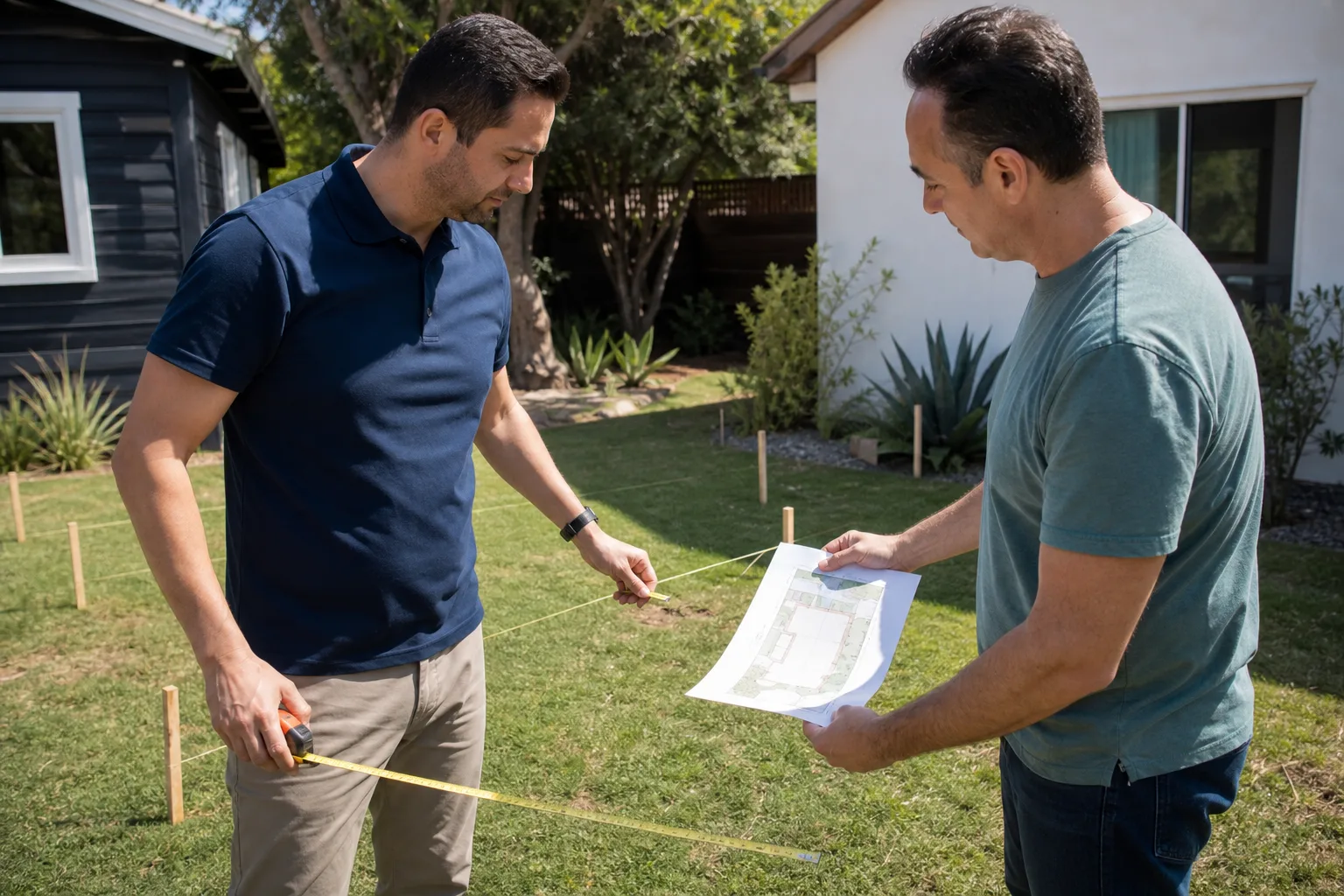
- Survey and existing conditions drawings. The city requires a current survey (usually within the last 5 years) for most ADU and addition permits. If you don’t have one, we order it. We also measure and document existing conditions, because the application has to show what’s already there, not just what you’re adding.
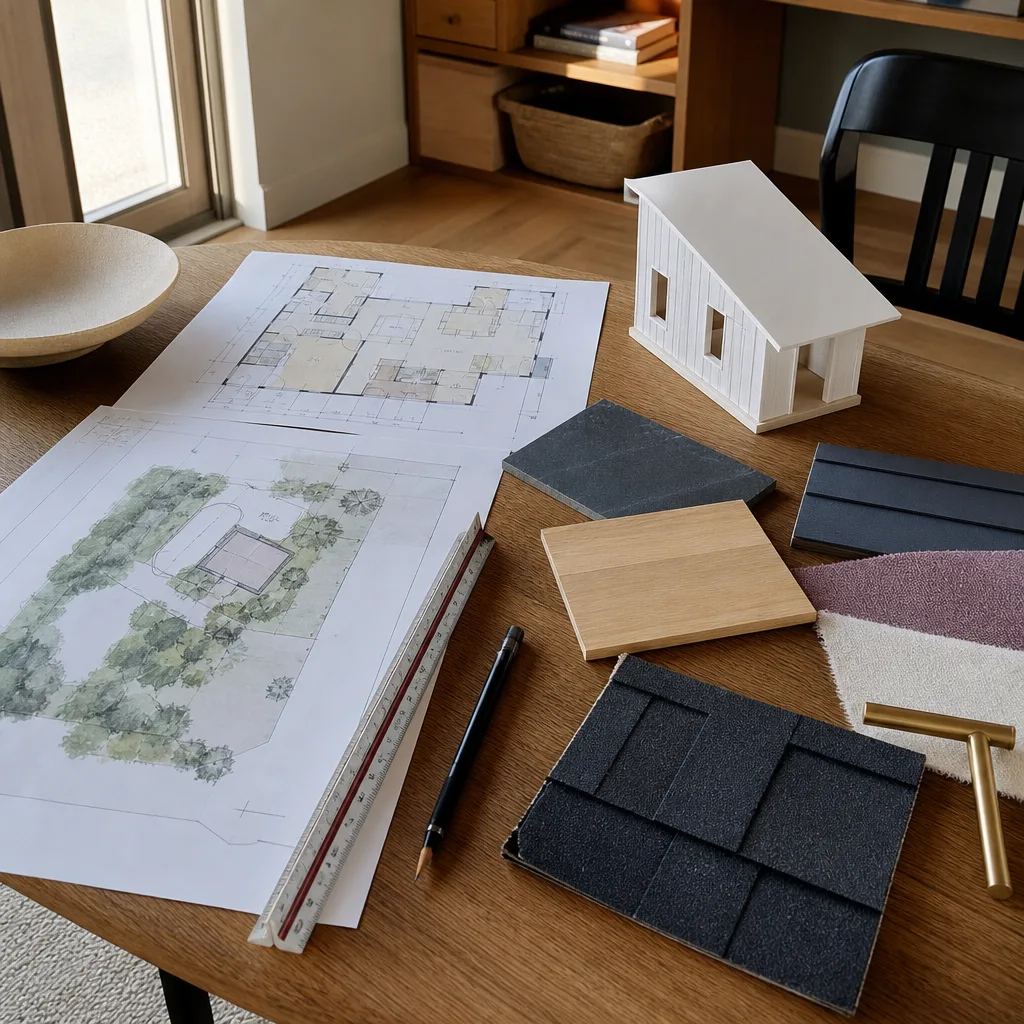
- Full permit set preparation. This is the heavy part. Depending on your project, the set includes architectural floor plans, elevations, foundation plans, structural calculations, electrical layouts, plumbing risers, and mechanical schedules. For prefab brands like Dvele or Boxabl, we adapt the manufacturer’s drawings to Houston requirements, which usually means additional foundation and wind-load details for our climate.
- Application submission and fee payment. We submit the full package through the Houston Permitting Center’s electronic plan review system and pay the filing fees. You receive a written breakdown of every fee before we submit, so there’s no surprise line item.
- Plan review tracking and corrections. We monitor the application weekly. When plan review comments come back (and they often do), we answer them directly, revise the drawings if needed, and resubmit. Every month of delay we prevent is a month you’re not paying carrying costs or watching a bare slab sit in the Houston rain.
- Permit issuance and posting. Once approved, we retrieve the permit card, confirm inspection requirements, and post the permit at the job site. The permit card has to be visible during construction, and Houston inspectors check for it on every visit.
Permit Application Pricing in Houston
Let’s talk real numbers, because “it depends” is not a useful answer when you’re budgeting a build. Permit application for an ADU or room addition in Houston generally runs $1,500 to $6,000 in combined filing fees and application-specific third-party costs. That range covers city fees, survey costs if needed, engineer stamps on drawings, and energy compliance documentation. It does not include the design work itself, which is part of our ADU Design & Permitting in Houston service.
| Cost Component | Typical Range in Houston | Notes |
|---|---|---|
| Houston permitting center filing fees | $800 – $2,500 | Based on project valuation. ADUs and additions on the lower end of that range; larger detached units push higher. |
| Survey (if not already current) | $600 – $1,500 | Residential lot, includes boundary and elevation data. Older surveys often need updating. |
| Engineered drawings (structural, foundation) | $500 – $1,800 | Required for most detached ADUs and any addition affecting roofline or foundation. Houston’s clay soils often trigger additional foundation analysis. |
| Energy code compliance (ComCheck or REScheck) | $150 – $400 | Mandatory for conditioned space. Simple calc, but required documentation. |
| Flood plain review (if applicable) | $100 – $500 | Depends on your FIRM map designation. Many Houston lots near bayous and creeks trigger this. |
What pushes the cost up: a lot in a flood zone, a structure that needs a new sewer tap or water meter upgrade, deed restriction review in a community like Kingwood or Clear Lake, or an older home where the existing plans don’t match what’s actually standing. What keeps it down: a standard lot, a current survey, and a straightforward project scope.
Every Sutton ADU Houston permit application comes with a written price before we file, and it’s the same price when the permit gets issued. No hourly billing, no “we ran into complications” invoice. That’s the Threshold Standard, and it’s a written part of every project we take.
Why Sutton ADU Houston Handles Permit Application
Sutton ADU Houston is part of the Threshold Group family of home-service companies, founded in 2006, and we operate under the same Threshold Verified standards that govern every technician and every project we touch. The ADU and addition market has a problem: homeowners are asked to open their doors to construction crews they’ve never met, for projects that run months, with costs that shift as the work progresses. We set out to run differently.
When you work with us, you know exactly who’s coming to your property before they arrive. Every technician who steps onto your lot is background-checked, identity-verified, and photo-badged. We send you their name and photo before the visit. They wear a clean, marked uniform and check in with photo ID at the door. This matters more than people think, especially in a long permitting and construction process where you’ll see the same faces across weeks and months.
And the price you’re quoted for the permit application is the price you pay. Our 365-Day Done Right Promise covers defects in workmanship for one full calendar year from project completion. If a plan review issue comes back after we’ve closed out, and it traces to something we did, we make it right. That’s not a verbal assurance; it’s stamped on the paperwork.
Houston-Specific Permit Realities We Deal With Every Week
Houston’s permit landscape is different from any other major Texas city, and that’s not a compliment. The Houston Permitting Center has improved its electronic plan review system, but plan review times still vary by project type and the specific reviewer assigned to your file. ADU and addition permits go through a residential plan review route that runs faster than commercial, but not fast.
A few things we see repeatedly in Houston, and how we handle them:
Deed restrictions trump the city. Many Houston neighborhoods, especially master-planned communities and older subdivisions like Garden Oaks, Oak Forest, and Timbergrove, have deed restrictions that prohibit or limit ADUs. We check these before you spend money on drawings. If your deed restriction says no detached structures, no permit application will fix that.
Flood plain and drainage rule everything. Houston’s flat terrain means even a small addition changes how water flows across your lot. The city’s drainage requirements often require a site grading plan and sometimes a detention analysis. In neighborhoods near Brays Bayou, White Oak Bayou, or Sims Bayou, expect a flood plain review and potentially higher foundation elevations.
Pre-1970 homes carry unknown building histories. Many Houston homes built before the city’s modern permitting system (roughly pre-1970) have unpermitted work that’s never been flagged. When we file a new permit application, the city sometimes asks about existing conditions that don’t match any record. We handle that by documenting existing conditions thoroughly in the submittal, which prevents stalls.
Separate permit jurisdictions inside the metro. The City of Houston permit office does not cover Bellaire, West University Place, Southside Place, Hunters Creek Village, or any of the other incorporated cities inside the loop. Your address determines which authority we file with, and the rules differ. We file with all of the major local authorities and know which ones require paper submissions versus electronic.
Working With Prefab and Modular ADU Brands
If you’re considering a Dvele, Mighty Buildings, or Boxabl unit, the permitting path is different from a stick-built ADU, but not simpler. The factory handles the off-site construction quality, but every unit still needs a Houston building permit, foundation plans stamped by a Texas-licensed engineer, utility connection drawings, and site-specific wind load details. Houston’s wind zone and our expansive clay soils mean the manufacturer’s standard foundation package often needs local adaptation.
We work with these brands directly, adapt their submittal packages to Houston requirements, and handle the full application. If you’re deciding between prefab and site-built, come to us before you buy. We’ll tell you honestly which route costs less and reviews faster for your specific lot.
And if you’re in the research phase, start with our home page for a full breakdown of what Sutton ADU Houston does across the Greater Houston area.
FAQs – Permit Application
How long does ADU permit approval take in Houston?
Expect 3 to 8 weeks for ADU and addition permit approval in Houston, assuming your drawings are complete and the application is filed correctly. Plan review comments add time, usually 1 to 3 weeks per round of corrections. Prefab and modular ADUs sometimes review faster because the factory documentation is standardized, but the foundation and utility drawings still go through the same plan review queue. Call (940) 242-3207 and we’ll give you a realistic timeline for your address and project type.
How much does a permit application cost in Houston?
A permit application for an ADU or room addition in Houston typically costs $1,500 to $6,000 in combined filing fees and third-party costs like surveys, engineer stamps, and energy code documentation. The city’s filing fee alone is generally $800 to $2,500 depending on project valuation. We give you a written line-item breakdown before we submit anything, and that number doesn’t change unless the project scope changes.
Can you handle the permit application for a property outside the Houston city limits?
Yes, we file permit applications across the Greater Houston area, including Bellaire, West University Place, Pasadena, Pearland, Sugar Land, The Woodlands, Katy, and the unincorporated parts of Harris, Fort Bend, and Montgomery counties. Each jurisdiction has its own application format, fee schedule, and review timeline. The process and pricing on this page reflect City of Houston filings; other authorities vary. Tell us your address and we’ll confirm your jurisdiction before we quote.
Do I need a permit for a prefab ADU like Dvele or Boxabl?
Yes, prefab and modular ADUs require Houston building permits, foundation plans stamped by a Texas-licensed engineer, and utility connection drawings. Factory certification covers the off-site construction, but it does not replace local site-specific engineering or the city application. We work with Dvele, Mighty Buildings, and Boxabl submittal packages and adapt them to Houston wind and soil requirements so the application moves through review without unnecessary comments.
What happens if the city rejects the permit application?
Rejections in Houston are almost always plan review comments asking for specific revisions, not outright denials. We read every comment, revise the drawings, and resubmit until the permit is issued. If we made an error in the submittal, we fix it at our cost. The 365-Day Done Right Promise covers defects in our workmanship for a full year, including plan review work that traces back to us.
Can you take over a permit application that another contractor started?
Yes. If you’ve already filed and you’re stalled, stuck in correction cycles, or your original contractor stopped responding, we’ll review the application, identify what’s blocking it, and take over the resubmission. We’ve inherited plenty of half-finished permit packages from Houston homeowners. Bring us the permit number and we’ll tell you exactly what it’ll take to get it approved.
Get Your Permit Application Started
The sooner we file, the sooner your ADU or addition gets built. Call Sutton ADU Houston at (940) 242-3207 for a free estimate on your permit application and the full design-and-permitting package. You’ll speak to a live person, not a voicemail tree. And you’ll get a written price before we file a single sheet of paper, with the name and photo of every technician who’ll step onto your property. That’s how we’ve operated since 2006, and it’s the only way we know how to work.
Written by Miles Hartwell, Owner at Sutton ADU Houston, serving Houston.