James Hardie Junior ADU Conversion: The Houston Owner’s Guide
If you’re mid-project on a junior ADU conversion using James Hardie siding and trim, we stock the HardiePlank, HardiePanel, HardieTrim, and HardieSoffit components Houston contractors and DIY builders need most, and our installed replacement work for failed or damaged James Hardie sections typically runs $450 – $1,800 depending on linear footage, height, and whether the underlying framing needs attention. Most Houston owners discover they have a problem the same way: a corner of HardieTrim has swelled at the bottom edge, a HardiePanel joint has opened up after a hard rain, or a piece of HardiePlank has cracked where a nail was driven too close to the edge. The good news is this is a fixable, predictable repair on a junior ADU conversion when you catch it before water gets behind the cladding.
The bigger issue is rarely the board itself. It’s the flashing, the gap, or the fastening pattern behind it. We’ll get into what fails first and why in a minute. First, a note on who we are: Sutton ADU Houston is an independent ADU and addition contractor. We’re not affiliated with James Hardie, but we work with their cladding systems regularly, including on junior ADU conversion projects across Houston.
Which James Hardie Models This Applies To
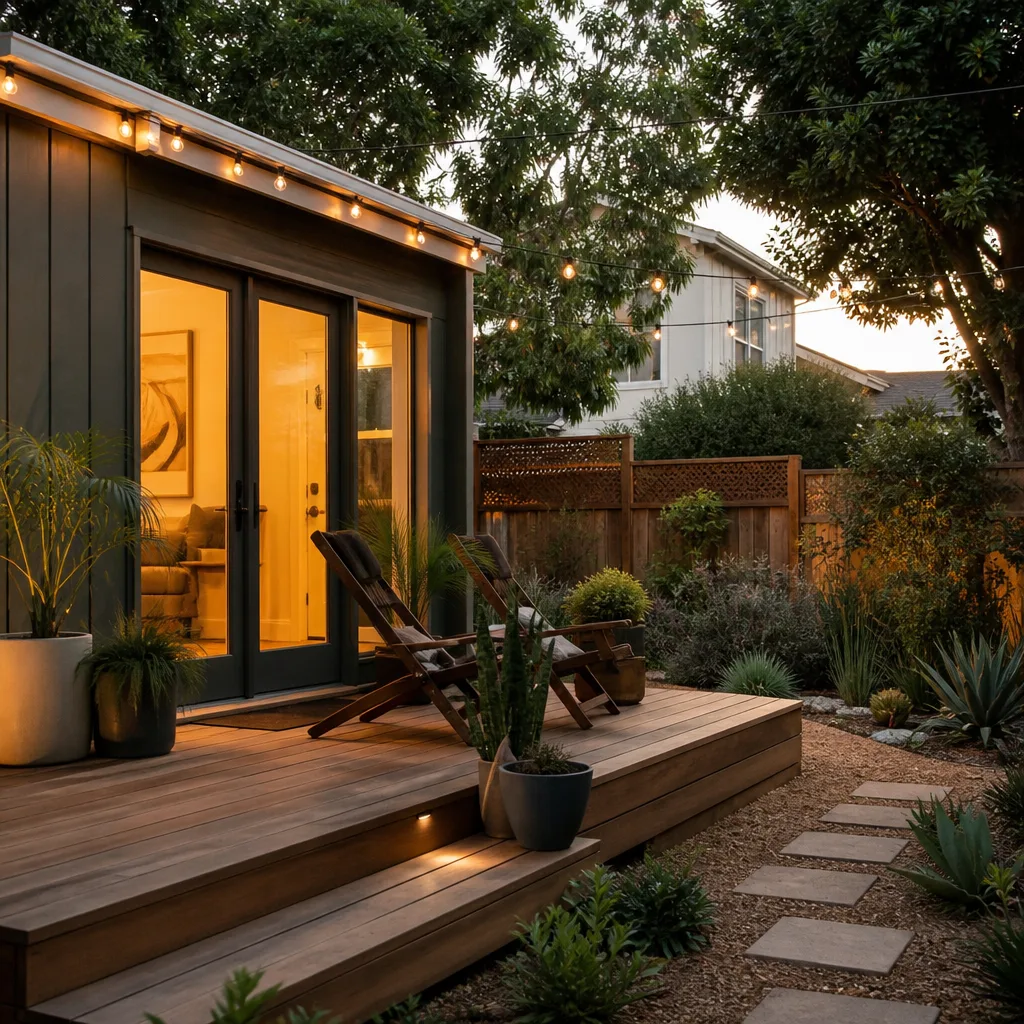
If your junior ADU conversion uses James Hardie product, you’re almost certainly working with one of four product lines: HardiePlank lap siding (the horizontal boards, either 5.25-inch, 6.25-inch, 7.25-inch, or 8.25-inch exposure), HardiePanel vertical siding (4×8, 4×9, or 4×10 sheets, with the Stucco, Select Cedarmill, or Sierra 8 finish), HardieTrim boards (the 4/4 and 5/4 thickness trim used at corners, windows, and frieze boards), and HardieSoffit (vented or non-vented panels for eaves). The product label is printed on the back of each board, but once installed, your best identifier is the profile and exposure width.
Here’s the compatibility gotcha Houston buyers run into constantly: you cannot swap a 5.25-inch HardiePlank for a 6.25-inch exposure mid-wall without re-laying out the entire elevation. The lap lines won’t align, and the cosmetic result looks like a patch job from across the street. If you’re replacing a damaged board, you need to match the exposure measurement, not just the product name. We carry the common HardiePlank exposures and HardieTrim profiles on our trucks when we know what we’re walking into. For oddball sizes or ColorPlus factory-finished pieces, we order exact match from our Houston supplier and come back within the week.
The OEM-versus-aftermarket question comes up a lot with James Hardie work. For structural panels and trim, stick with genuine James Hardie product. The fiber cement formulation matters for the warranty, and aftermarket lookalikes don’t hold paint the same way in Houston humidity. For fasteners and flashing, a quality aftermarket equivalent is fine, but it needs to be stainless or hot-dipped galvanized. Bare steel nails in Hardie is what causes the rust streaks you see on older conversions.
Signs Your James Hardie Junior ADU Conversion Is Failing
- Swelling or crumbling at the bottom edge of HardieTrim or HardiePlank. This is almost always ground contact or splashback. Hardie requires a 2-inch minimum clearance above grade and 1 inch above horizontal trim. When a Houston patio or flower bed gets built up against a junior ADU wall, that clearance disappears, and the board wicks water from the bottom up.
- Caulk bead cracking or pulling away from seams and window trim joints. Fiber cement expands and contracts with temperature and humidity. Houston’s swing from humid summer to dry winter pulls caulk loose at the seams, and once that seal is broken, water sits behind the board and works on the wall sheathing.
- Nail heads popping flush with the surface or boards clicking when the wind blows. Hardie that was applied with the wrong nail depth or overdriven fasteners doesn’t grab the studs the way it should. On a junior ADU conversion where the framing may be 24 inches on center, a missed stud means a board that moves in Houston thunderstorms.
- Gaps opening between HardiePanel sheets at vertical joints. HardiePanel needs an 1/8-inch gap between sheets with a flashing strip behind the joint. When the flashing was skipped, the panel edges separate over time, and the first heavy rain sends water straight into the wall cavity.
- Efflorescence or chalky white streaks running from the siding onto the foundation. This is a sign water is getting behind the board and leaching minerals out. It often shows up on the north side of a Houston ADU where walls stay damp after rain and dry slowly.
Replacement Cost & What’s Included
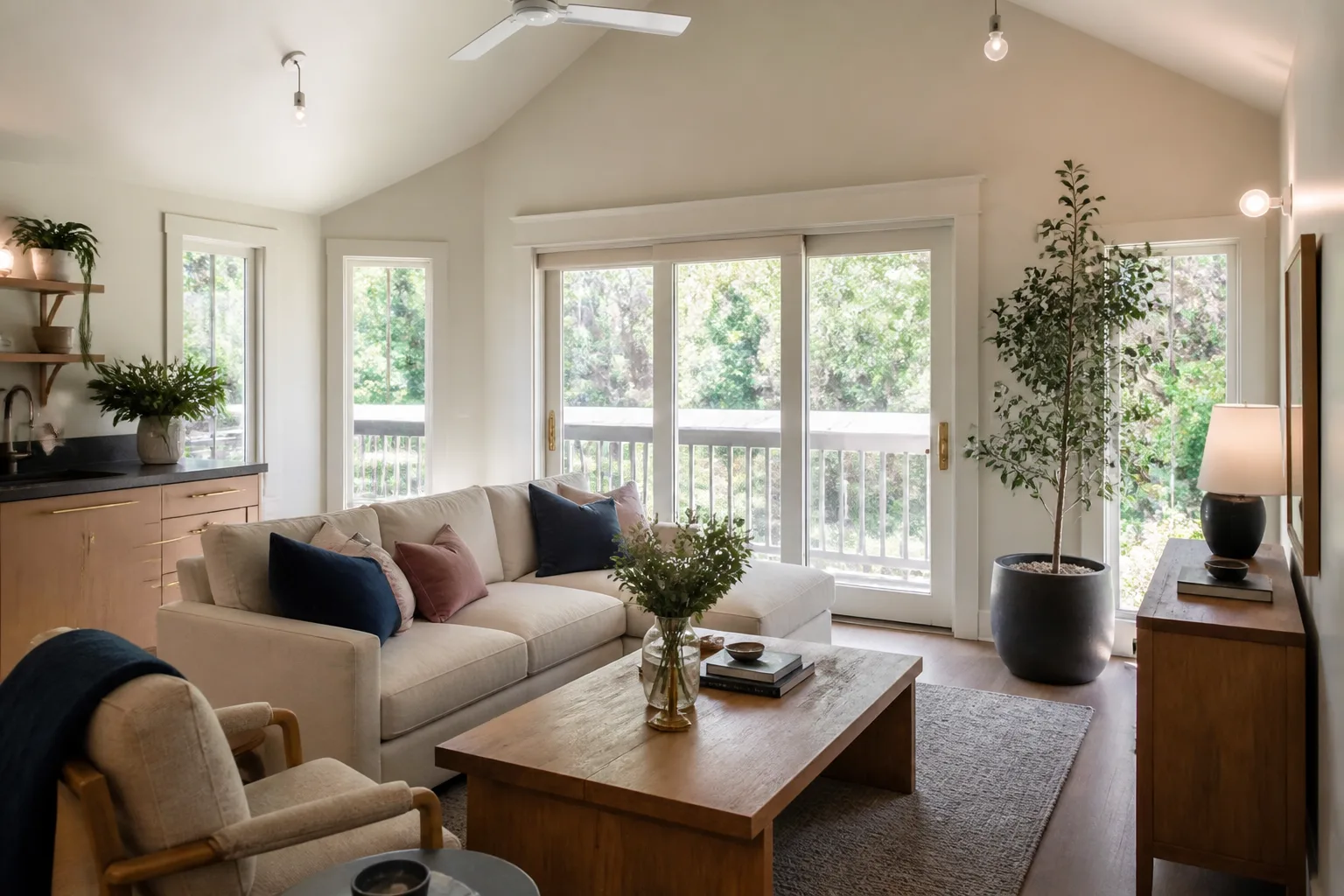
For a junior ADU conversion in Houston, most James Hardie replacement jobs fall into three buckets. A single damaged HardiePlank or a short trim run: $450 – $900 including the board, matching ColorPlus paint or primer-and-paint, removal of the old piece, inspection of the flashing behind it, and repair of any soft spot we find in the sheathing. A full elevation or two walls of HardiePlank replacement: $1,200 – $1,800 when the damage is widespread or the existing installation was so poor that patching won’t hold. A partial re-clad with new flashing details and trim replacement where the water damage ran into the framing: $2,000 – $3,500, because now we’re talking about a framer, a dry-in inspection, and possibly a permit amendment if the wall is opened.
What drives the range: linear footage, two-story work (which most junior ADUs don’t have, but some Houston garage conversions do), the condition of the housewrap or felt behind the siding, and whether you want the full Sutton standard: written price before work starts, no change orders unless you approve them in writing, and the 365-Day Done Right Promise covering the replacement work for one full calendar year. If an element of the cladding job fails during that year, we return and make it right at no cost. That’s the guarantee stamped on every job we run in Houston.
DIY or Call Us?
Here’s the honest split. If you own a circular saw, a dust mask, and a week of evenings, you can absolutely replace a single damaged HardiePlank yourself. Cut it with a fiber cement blade, prime the cut edges, and follow the nail pattern on the back of the board. What you can’t do easily on your own is figure out why the board failed in the first place, and that’s where the Houston-specific knowledge matters. We regularly find missing kickout flashing at roof-to-wall intersections, z-flashing that was installed backwards at horizontal trim, and ground clearance issues caused by landscape changes. If you swap the board without fixing the water path, you’ll be back here in 18 months.
The other honest point: Hardie is heavy and dusty to cut. On a hot Houston afternoon, two people, a set of scaffolding, and an OSHA-grade respirator make the job a lot safer than one determined homeowner on a ladder. If you want us to take it on, or if you want us to come look at what’s actually failing before you buy any materials, call (940) 242-3207. Tell me what you actually need the space to do, and we’ll figure out the rest from there.
FAQs
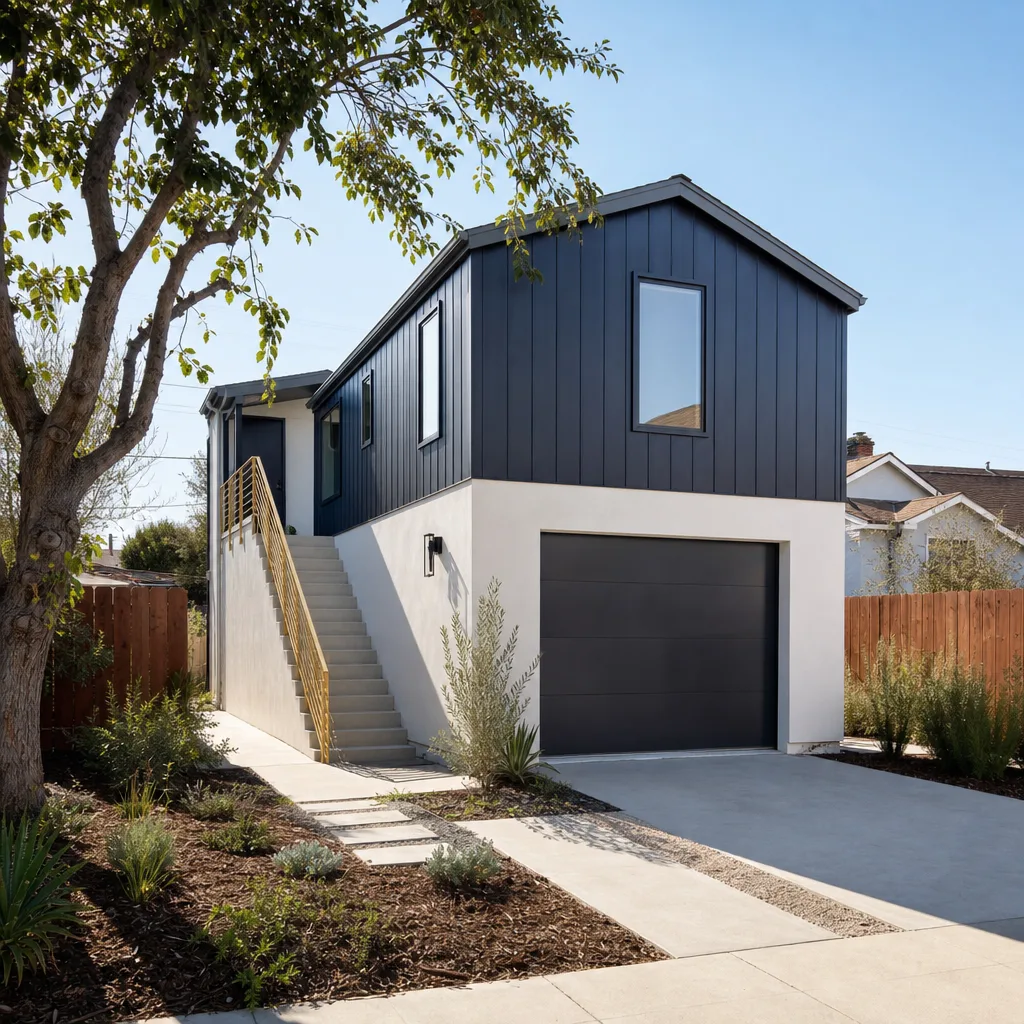
James Hardie’s fiber cement product carries a 30-year limited, non-prorated, transferable warranty, but in Houston’s climate the realistic service life between repaint cycles and board replacements is 15 – 20 years. The limiting factor isn’t the board itself, it’s the flashing details, fasteners, and ground clearance around the installation. We see Houston ADUs from 2009 and 2010 still wearing their original HardiePlank with nothing but faded paint, and we see 7-year-old conversions with failing cladding because the trim was set into the soil or the window flashing was never taped. Proper install buys you another decade in this climate. Call (940) 242-3207 if you want us to inspect what you’re working with.
Small cracks and chipped corners can be repaired with James Hardie’s recommended patching compound and repainted, and that’s a legitimate route for cosmetic damage. Swelling, crumbling, or separation at nail points cannot be repaired, because the board has taken on water and the structural integrity of the cement matrix is compromised. Our rule: if you can pinch a piece of the board and crumble it between your fingers, it’s a replacement, not a patch. For an honest assessment, call (940) 242-3207 and we’ll look at it before you spend money either way.
A single-board replacement with paint match is a half-day job, including setup, removal, flashing inspection, install, caulk, and primer. A full wall or elevation replacement is typically a two-day job in Houston weather. Add a day if we’re replacing trim boards and re-flashing, and another day if the wall has to be opened for framing repair and we need a city inspection. We’ll give you a written schedule before we start, and we don’t leave the wall exposed overnight if rain is in the forecast. Call (940) 242-3207 for a timeframe based on your specific project.
We keep the common HardiePlank exposures, HardieTrim profiles, and HardieSoffit panels on the truck when we know the scope, and we can pull exact-match pieces from our Houston supplier’s inventory for the rest, usually within three to five business days. ColorPlus factory-finished boards in specific colors often take a week because the distributor doesn’t stock every shade at every yard. If you’re mid-construction and want to know whether we can finish what another contractor started, call (940) 242-3207 with your product labels or photos and we’ll tell you what we can get and when.
Written by Miles Hartwell, Owner, Sutton ADU Houston at Sutton ADU Houston, serving Houston and nearby areas.